Ale is a beer. But not all beers are ales. That distinction — simple on the surface, surprisingly deep in practice — shapes everything from the glass in front of you to the food on your plate. Understanding the difference means understanding how fermentation, ingredients, and brewing tradition combine to produce two radically different drinking experiences.
The terms "ale" and "beer" get used interchangeably in casual conversation, and that's understandable. But for anyone who takes food and drink seriously, the confusion costs something real. Order the wrong style with a rich stew or a delicate fish dish, and the pairing falls flat. Know what you're drinking, and the whole meal shifts. The difference between ale and beer isn't just technical — it's sensory, cultural, and deeply tied to how flavors are built and experienced.
Beer is the category, ale is one of its branches
Start with the basics: beer is the umbrella term. Any fermented beverage made from malted grain, water, hops, and yeast qualifies as beer. Ale, lager, stout, porter, wheat beer — these are all beers. The distinction that matters most is how they're made, specifically the type of yeast used and the temperature at which fermentation takes place.
Ale sits alongside lager as one of the two primary branches of the beer family tree. The split is clean and fundamental. Everything else — flavor profiles, appearance, alcohol content, carbonation levels — flows downstream from this initial fork.
Why the confusion persists
Part of the problem is regional language. In the United Kingdom, "beer" has historically been used to mean any pub drink, while "ale" specifically referred to hop-flavored brews as opposed to older, unhopped versions. That linguistic legacy muddies the water for anyone coming to the subject from a British pub culture background. In the United States, the craft beer movement has made the terminology more precise, but the casual drinker still routinely conflates the two. The short answer: if someone offers you an ale, they're offering you a beer. If they offer you a beer, they might mean an ale, or they might mean a lager. Context matters.
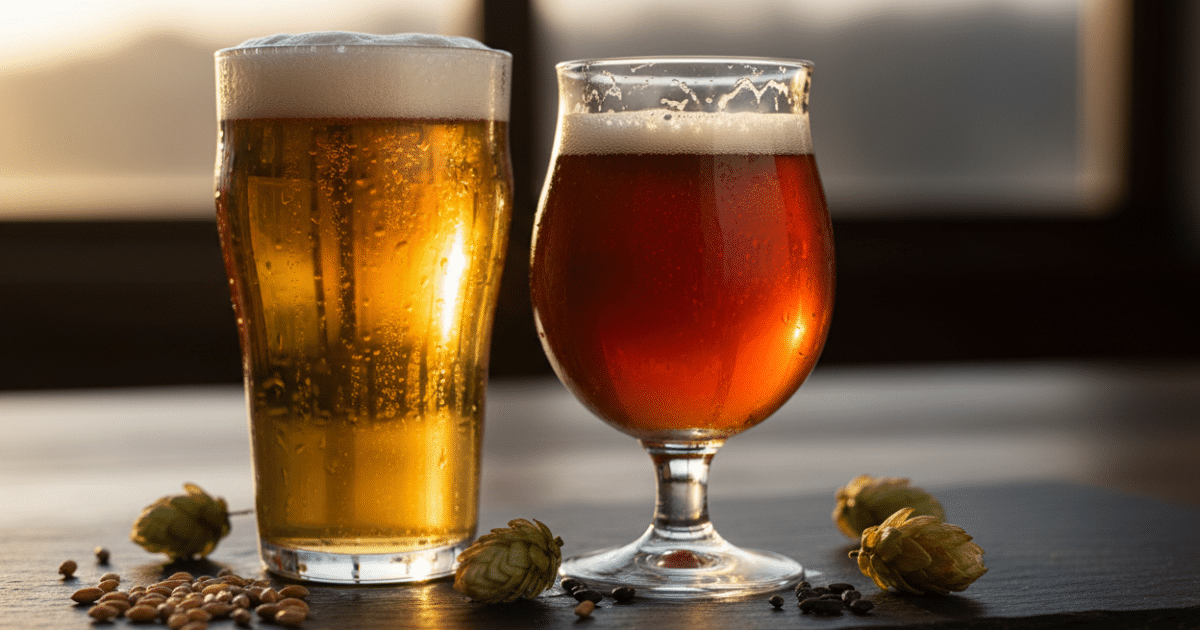
All ales are beers, but not all beers are ales. Lagers, for example, are beers that are not ales — they use a different yeast strain and ferment at colder temperatures.
The ingredients that define each style
At a basic level, ale and lager share the same four core ingredients: malted barley (or other grains), water, hops, and yeast. But the yeast is where everything diverges — and yeast is not a minor variable. It's the engine of the entire process.
Ale yeast versus lager yeast
Ales use top-fermenting yeast, scientifically classified as Saccharomyces cerevisiae. This strain works at warmer temperatures, typically between 15°C and 24°C, and tends to produce a broader range of flavor compounds called esters and phenols. These compounds are responsible for the fruity, spicy, and sometimes floral notes that characterize ales. A well-made pale ale might carry hints of citrus or stone fruit. An English bitter can taste of dried apricot and toast. A Belgian tripel might suggest banana and clove — all of it coming from yeast activity, not from added flavoring.
Lagers, by contrast, use bottom-fermenting yeast (Saccharomyces pastorianus), which operates at colder temperatures, around 7°C to 13°C, and produces a much cleaner, more neutral flavor profile. The yeast steps back, allowing the malt and hops to speak more directly. If you want to understand what separates these two worlds at a flavor level, the lager category offers a useful counterpoint to the ale experience.
Malt and hops: the supporting cast
Beyond yeast, malt plays a defining role in ale character. Darker malts — crystal, chocolate, roasted barley — appear more frequently in ales than in mainstream lagers. They bring caramel sweetness, roasted bitterness, and body. Hops vary enormously across ale styles: English ales tend toward earthy, herbal hop varieties; American ales lean heavily on citrusy, resinous Pacific Northwest hops; Belgian ales often use hops more sparingly, letting yeast character dominate.
The ratio and type of these ingredients directly determines what ends up in the glass. Brassage — the brewing process itself — is as much craft as science, and small adjustments at the ingredient level ripple through to the finished flavor in ways that take years to master.
Fermentation is where the real difference lives
If ingredients are the raw material, fermentation is the transformation. And it's here that the ale-versus-beer distinction becomes most concrete and most consequential.
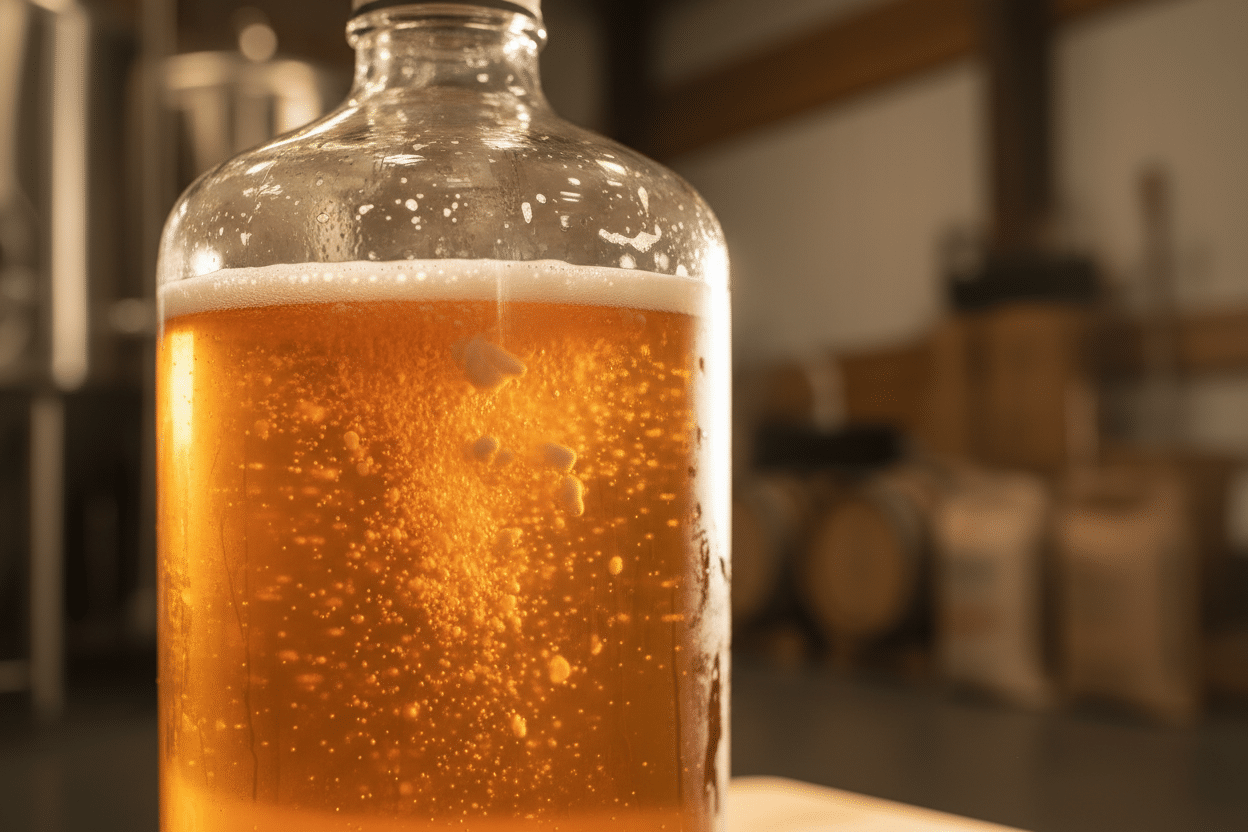
Top fermentation and its flavor consequences
Ale fermentation happens at warmer temperatures, which means the yeast is more active and more expressive. The process typically takes one to three weeks from start to finish, including conditioning time. During fermentation, the yeast rises to the top of the vessel — hence "top-fermenting" — and produces those characteristic fruity esters that define the ale flavor profile.
The warmer conditions also mean that ales can be produced more quickly than lagers, which is one reason they dominated brewing for centuries before refrigeration made cold fermentation practical at scale. Speed, however, isn't the point. The point is flavor complexity. A well-crafted bière artisanale in the ale tradition carries layers of flavor that a clean, cold-fermented lager simply doesn't attempt to replicate.
Cold fermentation and the lager approach
Lager fermentation runs cold and slow, sometimes lasting four to six weeks or more, followed by an extended cold-conditioning phase called lagering (from the German word for "storage"). The result is a beer that's crisper, cleaner, and more consistent — qualities that made lager the dominant global beer style over the twentieth century. But "clean" isn't the same as "complex." Ales trade the pristine clarity of a lager for something wilder and more varied.
Temperature control during fermentation is one of the most critical variables in brewing. Even a few degrees of difference can shift an ale’s flavor profile significantly, pushing ester production higher or lower depending on the yeast strain.
The styles and varieties that define ale culture
The ale family is vast. It encompasses some of the most diverse and characterful types de bière in the world, ranging from delicate session ales to punishingly strong barleywines. Understanding the main categories helps decode what's actually in the glass.
Pale ales and IPAs
Pale ale is the gateway style — approachable, balanced, and widely available. The India Pale Ale (IPA) takes that template and amplifies the hop character dramatically, producing the intensely bitter, aromatic beers that became the signature of the American craft brewing movement from the 1990s onward. West Coast IPAs lean dry and resinous; New England IPAs (NEIPAs) are hazy and tropical. Both are ales. Both use top-fermenting yeast. The difference lies in hop selection, dry-hopping technique, and water chemistry.
Stouts, porters, and dark ales
Stouts and porters are dark ales built on roasted malt. A Guinness, for example, is a dry Irish stout — an ale, not a lager, despite its cool, crisp presentation. Its characteristic roasted bitterness and creamy texture come from a combination of roasted barley and nitrogen carbonation, not from cold fermentation. For those curious about its nutritional profile, the calorie content of a pint of Guinness is a question worth addressing separately — but the point here is that it sits firmly in the ale category.
Belgian ales and wheat beers
Belgian brewing tradition represents perhaps the most complex expression of ale culture. Saisons, dubbels, tripels, and witbiers all fall under the ale umbrella, and each style demonstrates just how far top-fermenting yeast can push flavor in different directions. A Belgian witbier, brewed with unmalted wheat and spiced with coriander and orange peel, tastes nothing like an American IPA — yet both are ales, both use top-fermenting yeast, and both follow the same fundamental fermentation logic.
- Greater flavor complexity from ester and phenol production
- Enormous style diversity — from light wheat beers to rich stouts
- Pairs exceptionally well with food due to aromatic depth
- Often produced by independent craft breweries with distinct character
- Less consistent than cold-fermented lagers at the industrial scale
- Can be more challenging for drinkers accustomed to clean, neutral beer
- Higher alcohol content in some styles (barleywines, Belgian tripels)
Food pairings that actually work with ale
The goût de l'ale — its fruity esters, roasted notes, and hop bitterness — makes it a surprisingly versatile partner at the table. More so, arguably, than most lagers, which tend to cleanse the palate without engaging the food.
Pairing ales with savory dishes
Pale ales and IPAs work brilliantly with spiced and fried foods. The hop bitterness cuts through fat and oil, while the citrus aromatics complement dishes with fresh herbs, lemon, or chili heat. Think fish and chips, grilled chicken with chimichurri, or a Thai green curry. The bitterness acts as a counterbalance, preventing richness from becoming cloying.
Dark ales — stouts and porters — belong with roasted and braised meat. Beef stew, lamb shoulder, venison, smoked brisket: the roasted malt character in the beer mirrors the Maillard browning in the meat, creating a resonance that makes both taste more complete. A classic culture de la bière pairing like stout with oysters works on the same principle — the briny sweetness of the shellfish contrasts sharply with the dry roast of the beer, and the contrast elevates both.
Ale and cheese: an underrated combination
Belgian ales and cheese are a natural match. The fruity, spicy complexity of a saison or a dubbel stands up to aged cheeses — Comté, Gruyère, aged Gouda — in a way that most wines struggle to match. The carbonation scrubs the palate between bites; the esters echo the lactic and fruity notes in the cheese itself. For a more approachable pairing, an English bitter alongside a sharp cheddar is a combination that's been working in British pub culture for centuries, and with good reason.
The richness of brassage artisanal — the craft of building flavor through fermentation rather than addition — is precisely what makes ale such a compelling partner for complex food. A beer with nothing to say leaves the food to carry the conversation alone. An ale with character joins in, and the result is always more interesting than either element on its own.