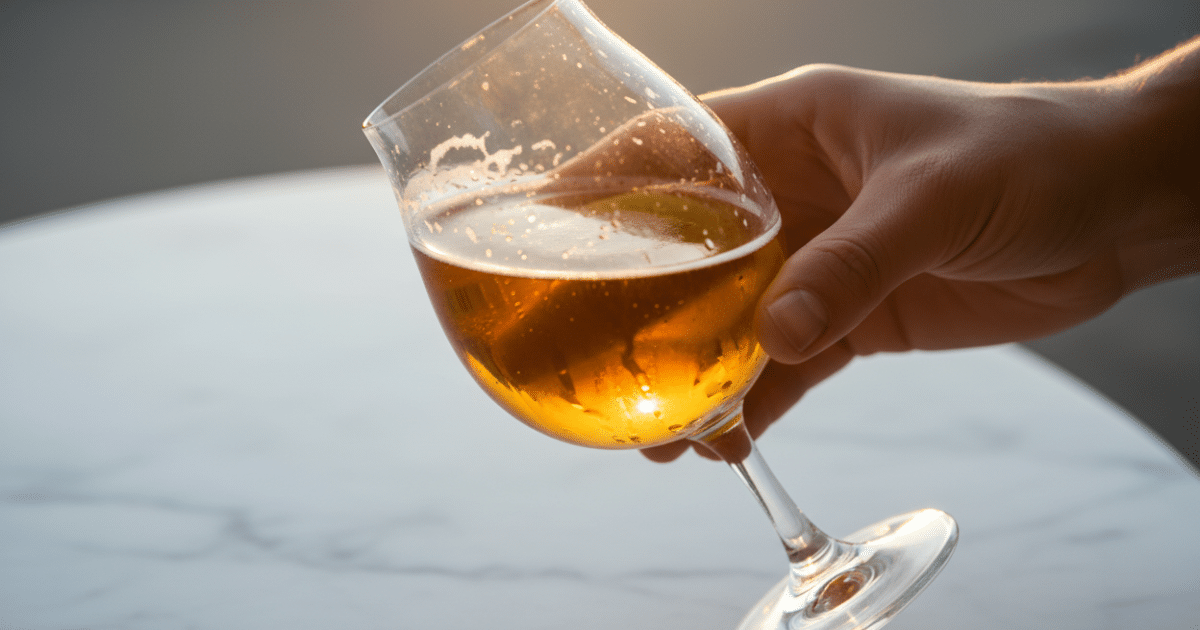
Serving beer at the wrong temperature doesn't just affect flavor — it fundamentally changes what you're drinking. A stout served ice-cold tastes flat and bitter; an IPA served too warm turns harsh and boozy. Understanding what temperature beer should be served at is the single most overlooked variable in getting the most from every pour.
The temperature of a beer at the moment it touches your palate determines which aromatic compounds reach your nose, how bitter or sweet the finish registers, and whether the carbonation feels lively or aggressive. Most drinkers accept whatever comes out of the tap or the fridge without a second thought. That's a mistake — and one that's surprisingly easy to fix.
Temperature shapes every aspect of what beer tastes like
Cold suppresses. That's the fundamental truth behind serving temperature. When beer is chilled below its optimal range, volatile aromatic compounds — the esters, phenols, and hop oils responsible for complexity — stay locked in solution. The palate registers bitterness more sharply, sweetness fades, and anything subtle about a beer's character simply disappears. Serve that same beer ten degrees warmer and it opens up entirely.
The physics here are straightforward. Aromatic molecules need thermal energy to escape from liquid into the air above the glass. Without that energy, a beautifully dry-hopped pale ale smells like almost nothing. A barrel-aged barleywine with notes of vanilla, dark fruit, and oak reads as nothing more than a dense, alcoholic liquid. Temperature isn't just a comfort preference — it's the mechanism by which flavor actually reaches the senses.
How carbonation responds to temperature
Carbonation behavior changes dramatically with temperature. Cold beer holds CO2 more tightly in solution, which means the bubbles stay smaller and more numerous, creating that sharp, prickly mouthfeel associated with a crisp lager. As temperature rises, CO2 comes out of solution more readily. For heavily carbonated styles, this can make a warm beer feel flat and gassy simultaneously — not a pleasant combination.
This is why highly carbonated Belgian ales and wheat beers have specific serving windows. Too cold and the carbonation feels harsh; too warm and the beer goes flat before the glass is finished. Getting the temperature right means the carbonation behaves exactly as the brewer intended.
The role of alcohol perception
Higher-alcohol beers present a particular challenge. Ethanol's warming sensation becomes much more pronounced as serving temperature rises. A 10% ABV imperial stout served at room temperature can taste almost undrinkably hot and alcoholic, while the same beer at 10-12°C integrates that alcohol into the overall flavor profile rather than leading with it. For lower-alcohol session beers, this effect matters less — but for anything above 7-8% ABV, temperature control is genuinely decisive.
Each beer style has a specific serving temperature range
There's no single answer to what temperature beer should be served at — the range spans roughly 3°C to 16°C depending on the style. Grouping beers by category makes this manageable in practice.
Light lagers and pilsners: serve cold
Light lagers, standard pilsners, and mass-market beers are designed to be served cold — between 3°C and 6°C. These beers are built for refreshment rather than complexity, and cold temperatures enhance that proposition by keeping the flavor profile clean and the carbonation sharp. If you want to understand what distinguishes a lager beer from other styles, serving temperature is actually part of the definition — cold fermentation, cold conditioning, cold service.
Wheat beers and hefeweizens belong in the 6°C to 8°C range. They carry more aromatic complexity from their yeast strains — banana, clove, bubblegum — and need a slightly higher temperature to let those esters express themselves, while staying cool enough to remain refreshing.
Pale ales and IPAs: the middle ground
American pale ales and IPAs perform best between 7°C and 10°C. This window is wide enough to let hop aromatics — citrus, pine, tropical fruit — volatilize properly, while keeping the beer cool enough that any bitterness stays balanced rather than aggressive. Serve an IPA warmer than 12°C and the hop bitterness becomes abrasive; serve it colder than 5°C and the dry-hop character goes completely silent.
New England IPAs, with their emphasis on aroma over bitterness, can tolerate the upper end of that range — even up to 11°C — because the juicy, soft character of the style benefits from a bit more warmth to open up.
Dark ales, stouts, and high-ABV beers: serve warmer
Stouts, porters, and dark ales should be served between 10°C and 13°C. The roasted grain character, chocolate notes, and coffee undertones that define these styles need warmth to emerge. Serving a dry Irish stout at 4°C — which is what happens when it comes straight from a domestic fridge — collapses the flavor into a thin, bitter liquid. The classic serving temperature for a pint of Guinness, for instance, sits around 6°C to 8°C from a properly calibrated tap system, which is warmer than most people assume.
A Guinness or similar dry Irish stout is ideally served between 6°C and 8°C — significantly warmer than a lager. This temperature range allows the roasted malt character to come through without the beer tasting flat or warm.
Barleywines, imperial stouts, and Belgian strong ales deserve the warmest service — 12°C to 16°C. These are sipping beers, not session beers, and their complexity — dried fruit, caramel, spice, oak, alcohol warmth — only reveals itself at cellar temperature or above. Drinking a 12% ABV barleywine at fridge temperature is a genuine waste of the beer.
| Beer Style | Ideal Serving Temperature |
|---|---|
| Light lager, pilsner | 3°C – 6°C |
| Wheat beer, hefeweizen | 6°C – 8°C |
| Pale ale, IPA | 7°C – 10°C |
| Stout, porter | 10°C – 13°C |
| Barleywine, imperial stout | 12°C – 16°C |
| Belgian strong ale | 13°C – 16°C |
Practical techniques for reaching the right serving temperature
Knowing the target temperature is one thing. Getting there reliably is another. Most domestic fridges run between 2°C and 5°C — fine for lagers, too cold for everything else.
Warming beer from fridge temperature
For stouts, dark ales, and high-ABV beers stored in the fridge, the simplest approach is to pull them out 20 to 30 minutes before serving. In a room at 18-20°C, a bottle will rise roughly 2-3°C per 10 minutes depending on its size. A 330ml bottle warms faster than a 750ml format — worth accounting for when timing a serve.
Avoid any temptation to warm beer in a microwave or in hot water. Both methods create uneven temperature distribution and can drive off carbonation or alter flavor through localized heat. Patience is the only technique that works here.
Chilling beer quickly
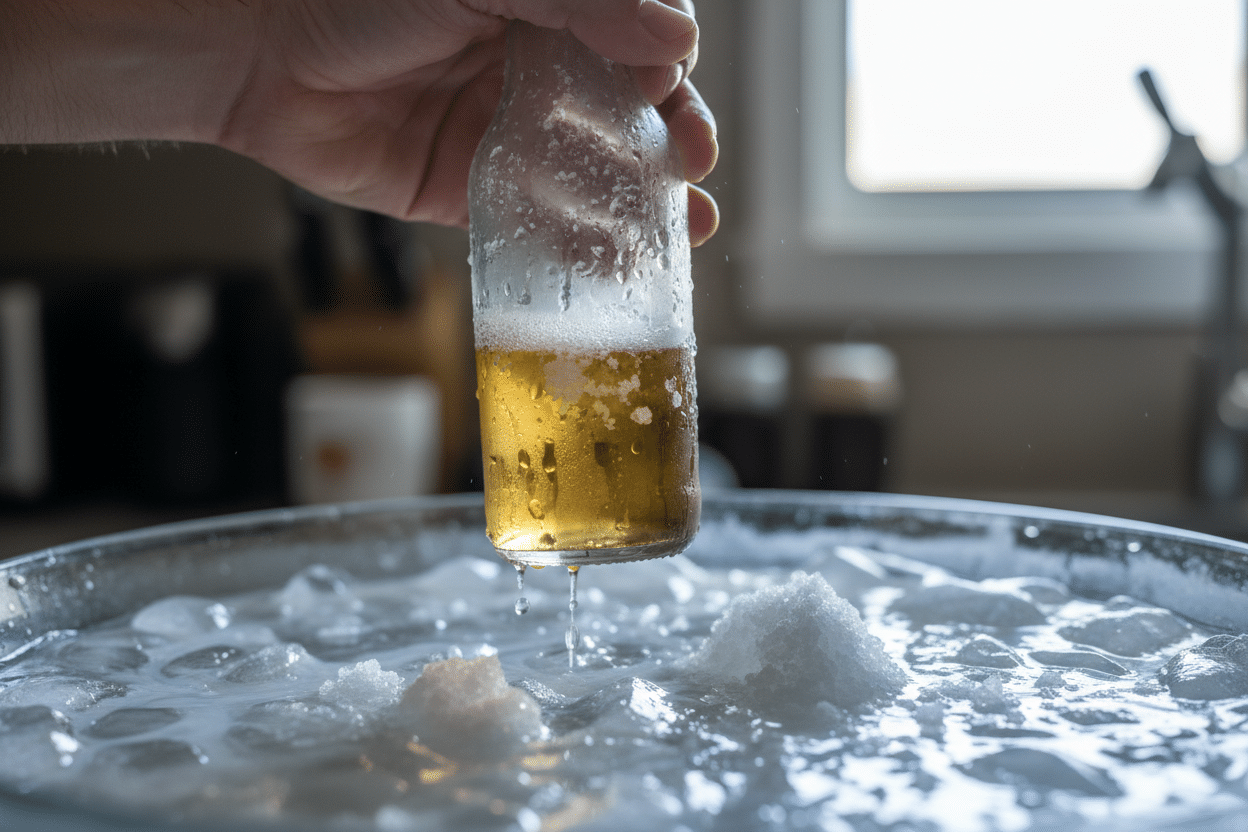
When beer needs to come down in temperature fast — a bottle of lager that's been sitting at room temperature, for instance — an ice bath outperforms the freezer by a significant margin. A bucket of water and ice chills a bottle to serving temperature in roughly 15 minutes, compared to 25-30 minutes in a freezer. The water conducts heat away from the bottle far more efficiently than cold air.
Adding salt to the ice bath lowers the freezing point of the water, making the bath colder and accelerating the process. This is the same principle behind old-school hand-cranked ice cream — and it works just as well for beer.
For fast results, wrap the bottle in a wet paper towel and place it in the freezer. Evaporative cooling drops the temperature noticeably faster than a dry bottle. Set a timer for 12-15 minutes — a forgotten beer in the freezer is a very different problem.
Glassware temperature matters too
A warm glass undermines everything. If a beer is served at the correct temperature into a glass that's been sitting in a warm room, the temperature at the rim rises immediately. Rinsing the glass with cold water just before pouring — not ice water, which can cause thermal shock and affect carbonation — keeps the serving temperature stable through the first half of the drink, which is where first impressions are made.
Common serving mistakes that ruin good beer
The most pervasive mistake is treating the fridge as a universal beer storage solution at a single temperature. A standard domestic fridge set to 3°C is appropriate for exactly one category of beer. Everything else is being served too cold.
Over-chilling complex beers
Craft beer drinkers who invest in interesting, expensive bottles — a 750ml Belgian tripel, a barrel-aged porter, a vintage barleywine — and then serve them straight from the fridge are experiencing a fraction of what they paid for. The aromatic complexity that makes those beers worth drinking simply doesn't exist at 3°C. If you're curious about the caloric density of heavier beers like stouts, it's worth knowing that the nutritional profile of a pint of Guinness reflects the richer malt bill that also demands a warmer serving temperature to shine.
Ignoring glass shape alongside temperature
Temperature and glassware work together. A tulip glass concentrates aromatics above the liquid, amplifying the effect of a properly warmed beer. A straight pint glass dissipates those aromatics. Serving a complex Belgian ale at the right temperature in the wrong glass still leaves half the experience on the table. Neither variable can fully compensate for the other.
Letting beer warm too much during service
The opposite problem is real too. A carefully tempered beer left in a warm room for 20-30 minutes drifts well above its ideal range. High-ABV beers in particular become unpleasant when they overshoot their target window — the alcohol heat takes over and the balance collapses. Serve in smaller pours if the setting is warm, or keep the bottle chilled and pour progressively.
- Full aroma expression from hops, malt, and yeast
- Balanced bitterness and sweetness
- Carbonation behaves as intended
- Alcohol integrates into the overall flavor
- Aromatics suppressed or absent
- Bitterness perceived as harsher
- Complexity collapses to a flat profile
- Carbonation feels sharp and aggressive
The effect of temperature on beer goes beyond personal preference
There's a tendency to treat serving temperature as a matter of taste — some people like cold beer, full stop. But the science doesn't support that framing. Temperature isn't a preference variable in the way that hop bitterness or sweetness might be. It's a physical mechanism that determines which flavor compounds are active and which are suppressed. Choosing to drink a complex beer ice-cold isn't a preference — it's choosing not to taste most of what's in the glass.
When cold service is the right call
That said, cold service is genuinely the correct choice for certain beers and certain contexts. A light lager on a hot day, served at 4°C, is doing exactly what it's designed to do. Refreshment, clean finish, sharp carbonation — all of that is optimized by cold temperature. The problem arises when the same logic is applied universally, regardless of style.
Building a practical temperature habit
The most useful habit to develop is simple: before opening a beer, think about what style it is and where it's been stored. If it's a complex dark ale or a high-ABV bottle that's been in the fridge, give it time. If it's a lager that's been sitting at room temperature, get it cold first. This takes ten seconds of thought and transforms the drinking experience in a way that no glassware upgrade or premium purchase can match. The temperature at which beer is served isn't a detail — it's the foundation on which everything else rests.