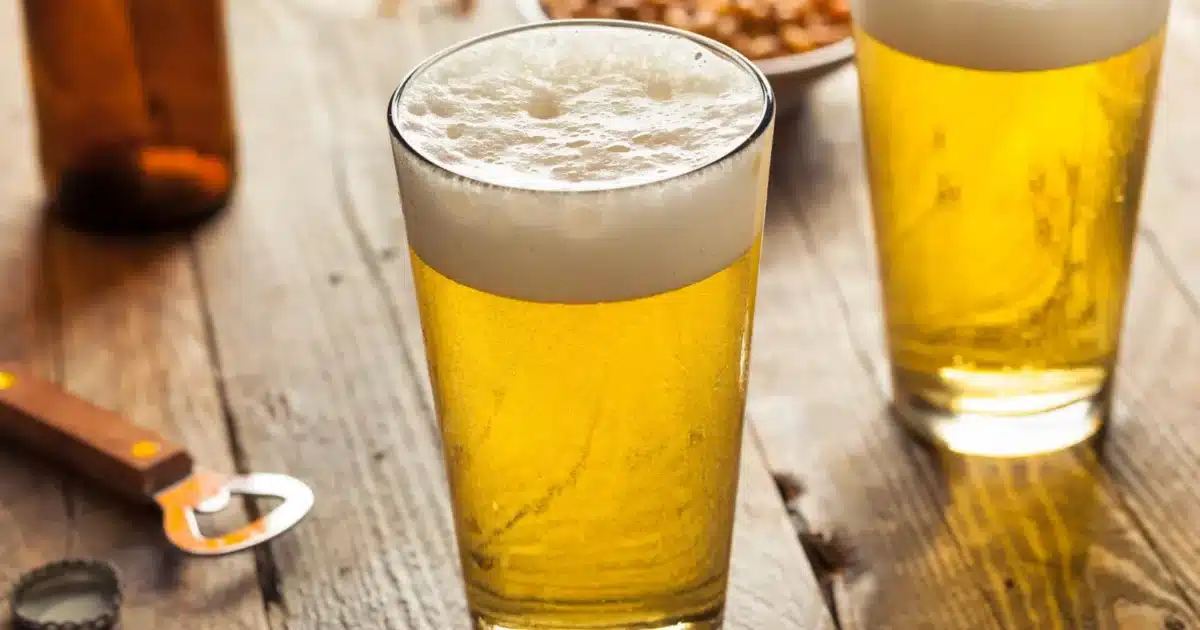
Lager beer is defined by one thing above all else: cold fermentation. This single technical choice, developed in 15th-century Bavaria, produces a cleaner, crisper profile than any other beer category. But reducing lager to "light and refreshing" misses the point entirely — the family spans everything from delicate Pilsners to rich, warming Bocks that rival the complexity of wine.
Lager is the world's most consumed beer style, and yet it remains one of the least understood. Ask most drinkers what a lager actually is, and you'll get vague answers about carbonation or color. The reality is more interesting. Lager is a brewing philosophy, a set of techniques refined over centuries that produce a specific fermentation character — and within that framework, an extraordinary range of flavors, textures, and culinary applications.
The reputation of lager as the default "bland" option belongs to a narrow slice of the category: the mass-produced pale lagers that dominate supermarket shelves. The full picture looks very different.
The origins of lager beer run deeper than most people realize
The word "lager" comes from the German lagern, meaning "to store." That etymology tells the whole story. Before refrigeration existed, Bavarian brewers in the 15th century discovered that beer brewed and stored in cold Alpine caves during winter months developed a distinctly different character — smoother, cleaner, and more stable than beers fermented at room temperature.
Cold storage as a brewing revolution
This wasn't a deliberate invention so much as an empirical observation. Brewers noticed that yeast behaved differently at low temperatures, sinking to the bottom of the fermentation vessel rather than rising to the surface. This bottom-fermenting yeast (Saccharomyces pastorianus) became the defining biological agent of all lager production. The cold environment slowed fermentation, extended the conditioning period, and suppressed the production of esters and phenols that give ales their fruity, spicy character.
By the 17th century, Bavarian authorities had actually legislated the brewing season: the famous Reinheitsgebot of 1516 had already standardized ingredients, and local edicts restricted brewing to the cold months between late autumn and early spring. The result was a beer culture built around cold-weather production and extended cellar storage.
Industrial refrigeration and global expansion
The real turning point came in the 19th century. The invention of mechanical refrigeration — and the work of scientists like Louis Pasteur on fermentation microbiology — allowed lager production to move beyond its Alpine origins. Bohemian brewers in Plzeň (Pilsen) created the first pale golden lager in 1842, a style that would eventually become the template for the majority of beers sold worldwide. German emigrants carried lager brewing traditions to the Americas, Australia, and beyond, establishing the style as the global standard for commercial beer production.
The brewing process that defines lager beer
Understanding what makes a lager requires looking at the fermentation science, not just the ingredients. The grain bill, hops, and water chemistry all matter — but the temperature and yeast management are what separate lager from every other beer category.
Fermentation at low temperatures
Lager fermentation typically takes place between 4°C and 10°C (39°F to 50°F). At these temperatures, the bottom-fermenting yeast works slowly and methodically, producing very little of the aromatic byproducts that characterize ales. The result is a beer fermentation character that is neutral, clean, and allows the malt and hop profiles to come through without interference.
After primary fermentation, lager undergoes a conditioning phase called lagering — cold storage at near-freezing temperatures, traditionally lasting anywhere from four weeks to several months. This extended rest allows the beer to clarify naturally, carbonate slowly, and develop the smooth, rounded finish that distinguishes quality lager from rushed production. Many commercial lagers today are conditioned for far shorter periods, which is one reason craft lager has become such a distinct and valued category.
The lagering phase is often cut short in industrial brewing to reduce costs. A traditional lager conditioned for 6 to 8 weeks will have noticeably more depth and smoothness than one conditioned for 10 days — a key reason why craft lager tastes fundamentally different from its mass-market equivalent.
Ingredients and water chemistry
The grain bill for most lagers centers on pale barley malt, though adjuncts like rice or corn are common in American-style lagers to lighten body and flavor. Hops in lager tend toward the noble varieties — Saaz, Hallertau, Tettnang, Spalt — which contribute subtle floral, herbal, or spicy notes rather than the aggressive bitterness of American hops. Water chemistry plays an outsized role: the soft water of Plzeň was instrumental in creating the delicate character of the original Pilsner, while the harder water of Munich suits the maltier Munich Helles style.
The major styles of lager beer and their distinct characters
Lager is not a single beer — it's a broad family. The stylistic range within the category is wider than most drinkers appreciate, stretching from barely-there pale lagers to dark, complex beers with significant alcohol and malt depth.
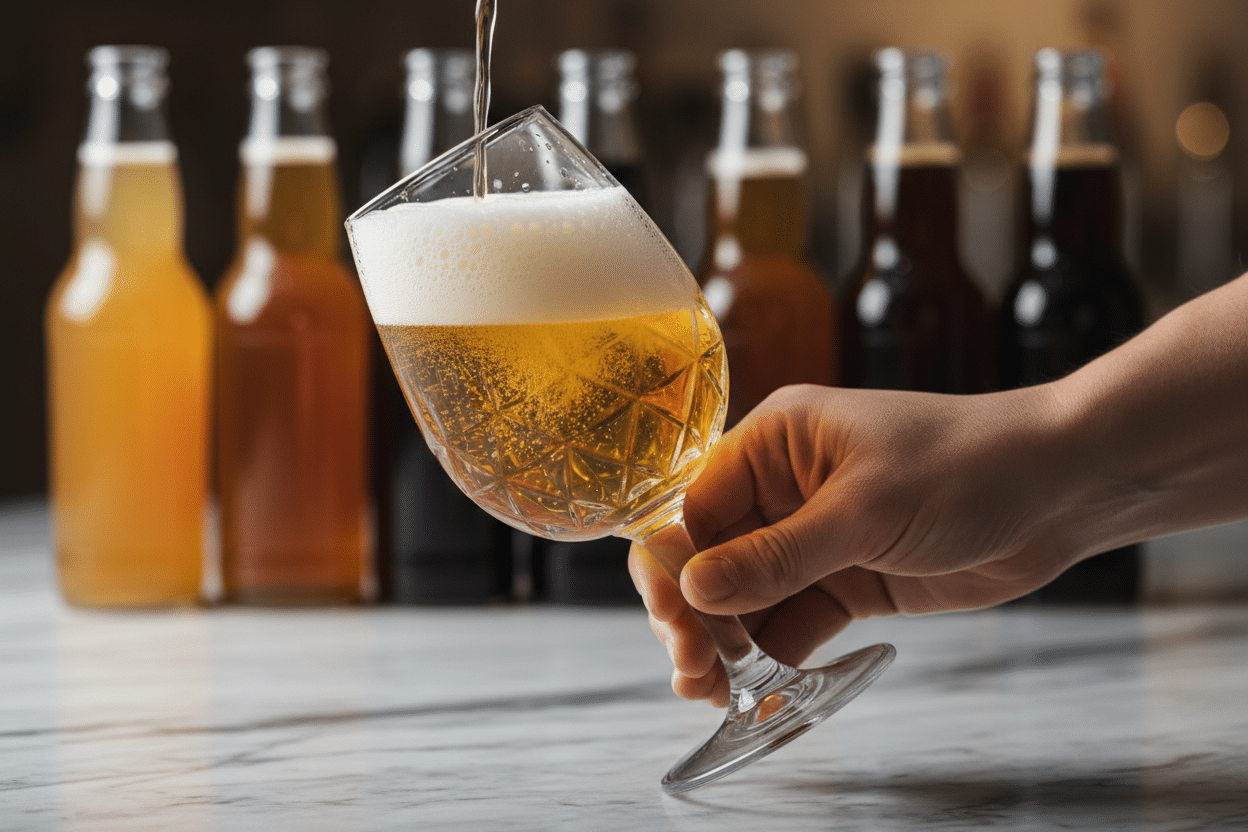
Pilsner and pale lager
The Pilsner is the most replicated beer style in history. The original Czech Pilsner (or Bohemian Pilsner) is pale gold, with a pronounced but refined bitterness from Saaz hops, a soft malt backbone, and a dry, clean finish. German Pilsner leans drier and more bitter. The mass-market pale lager — the category that includes most global brands — is a simplified descendant of this style, dialed back in bitterness and body for maximum approachability.
The Munich Helles, developed in 1894 as a Bavarian response to the Bohemian Pilsner, is softer and maltier, with less hop presence and a rounder, more bread-like character. It's the lager that serious beer drinkers often cite as the most elegant expression of the style.
Märzen, Dunkel, and Bock
Märzen (also called Oktoberfest beer in its traditional form) is an amber lager with toasty, biscuity malt character and moderate bitterness. Brewed in March and lagered through summer for autumn consumption, it carries more body and color than pale lagers but remains clean and balanced.
Dunkel — German for "dark" — is a Munich dark lager with chocolate, caramel, and bread crust notes, despite being brewed with the same bottom-fermenting yeast. The darkness comes from roasted malts, not from fermentation character.
Bock is where lager shows its most assertive side. This strong German lager style (typically 6.3% to 7.5% ABV) comes in several variants: traditional Bock, Doppelbock (even stronger, with rich caramel and dried fruit notes), Maibock (a paler, more hop-forward spring version), and Eisbock (concentrated through partial freezing). Doppelbock was historically brewed by Paulaner monks in Munich as "liquid bread" for fasting periods — a detail that says everything about the style's nutritional density.
- Exceptional food pairing versatility across cuisines
- Clean fermentation profile that showcases malt and hop quality
- Wide stylistic range from 3.5% to 14% ABV
- Long shelf stability due to extended cold conditioning
- Often reduced to mass-market pale lager in popular perception
- Requires more time and energy to produce than ales
- Craft lager remains underrepresented in specialty beer retail
- Complex styles like Doppelbock are frequently overlooked
Lager beer pairs with food in ways that most people underestimate
The culinary potential of lager is genuinely underexploited. The clean fermentation profile that makes lager easy to drink also makes it an unusually adaptable partner at the table — it complements without competing, and its carbonation cuts through fat and richness in a way that wine often cannot.
Pale lagers and delicate flavors
A well-made Pilsner or Helles is the right choice alongside dishes where subtlety matters. Grilled white fish, steamed shellfish, sushi, and light salads all benefit from the beer's clean bitterness and carbonation without being overwhelmed. Czech cuisine understood this intuitively: svíčková (braised beef with cream sauce) served alongside a Czech Pilsner is a classic pairing that balances richness against crispness.
Spicy food is another area where pale lager excels. The low bitterness and high carbonation of a standard bière blonde cool the palate and reset the senses between bites — a reason why lager dominates beer culture in Southeast Asia, where it pairs naturally with Thai, Vietnamese, and Sichuan cuisines.
Amber and dark lagers with richer dishes
Märzen and Dunkel open up pairings with more substantial food. The toasty malt character of a Märzen sits naturally alongside roasted pork, grilled sausages, and aged cheeses. Traditional Bavarian cuisine — pretzels, roast chicken, pork knuckle — was essentially designed around this style of beer.
Dunkel's chocolate and caramel notes make it a credible partner for braised meats, mushroom-based dishes, and even dark chocolate desserts. And Doppelbock, with its dense malt sweetness and alcohol warmth, pairs with blue cheese, foie gras, or slow-cooked lamb in ways that challenge the assumption that beer can't occupy the same gastronomic territory as wine.
When cooking with lager, opt for a Märzen or Munich Helles rather than a pale lager. Their malt depth survives the heat of cooking and adds genuine flavor to braises, beer-battered fish, or bread doughs. Mass-market lagers tend to cook down to bitterness without sweetness.
Lager beer in the modern craft brewing scene
For years, craft brewing was synonymous with ales. IPAs, stouts, sour beers — these were the styles that defined the artisan beer movement from the 1980s onward. Lager was left to the industrial producers. That dynamic has shifted significantly over the past decade.
The craft lager revival
Craft breweries have returned to lager with serious intent. The reasons are partly commercial — lager's broad appeal makes it a sensible anchor product — but also technical. Brewing a genuinely good lager is harder than brewing a good ale. There's nowhere to hide: the clean fermentation profile means any flaw in ingredients, process, or conditioning is immediately apparent. A great craft lager is a demonstration of brewing discipline.
The bière artisanale lager movement has produced styles that were barely visible outside their home regions a generation ago. Czech-style Pilsners brewed with open fermentation, Italian Pilsners hopped with aromatic varieties, Japanese-inspired rice lagers with exceptional delicacy — the category has expanded far beyond its traditional German and Bohemian roots. Breweries in the United States, the United Kingdom, and Scandinavia are now producing lagers that compete directly with the best traditional European examples.
Lager's place in contemporary food culture
The broader culture de la bière has also evolved. Beer pairing menus at serious restaurants increasingly feature lager alongside ales and sours, recognizing that the style's versatility makes it more useful at the table than its reputation suggests. The rise of beer tourism in Bavaria, Bohemia, and increasingly in craft beer destinations worldwide has introduced new audiences to the full stylistic range of lager — from the session-strength Helles at a Munich beer garden to the contemplative Doppelbock at a monastery brewery.
Lager's story is still being written. The combination of ancient technique, rigorous process, and expanding craft experimentation means the category continues to produce genuinely new expressions of what cold fermentation can achieve.