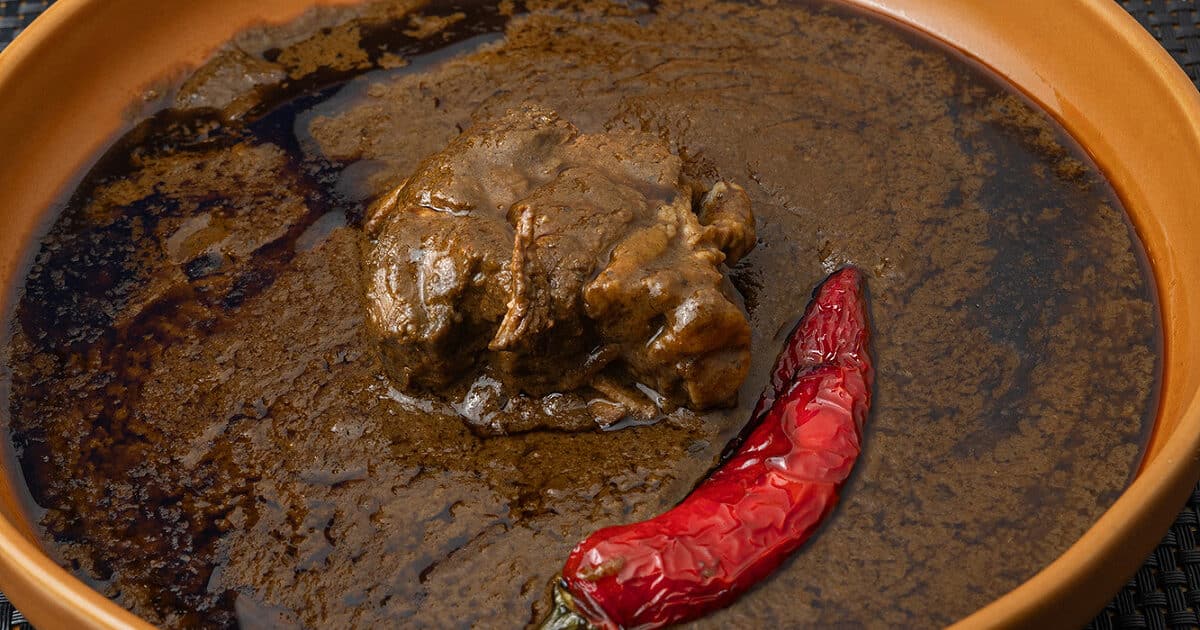
Mloukhiya is one of Tunisia's most deeply rooted slow-cooked dishes, built around dried jute leaf powder and long, patient heat. Underrated outside the Maghreb, it rewards preparation time with a sauce unlike anything else in North African cuisine.
Few dishes carry the weight of memory the way mloukhiya does. In Tunisian households, this dark, velvety stew has been simmering on stovetops for generations, yet it rarely makes it onto the menus of North African restaurants abroad. That's a genuine oversight, because the depth of flavor this dish develops over hours of slow cooking is extraordinary.
The timing matters, too. With Ramadan 2026 approaching, mloukhiya sits naturally at the center of the table, the kind of dish that feeds a crowd and tastes even better reheated the following day.
Mloukhiya starts with one unusual ingredient
The foundation of this Tunisian dish is poudre de corète, a powder made from dried and finely ground jute leaves (also called corète potagère). It's what gives mloukhiya its deep green-black color and its distinctly earthy, slightly bitter flavor profile. You won't find it in a standard supermarket. The right place to look is an African or Oriental grocery store, where it's sold in small bags, sometimes labeled meloukhia or molokhia powder.
Torréfaction: the step most people skip
Before anything else goes into the pot, the corète powder needs to be toasted in oil over low heat, stirring constantly, for at least 10 minutes. This step is not optional. Skipping it, or rushing it, leaves a bitter, raw taste in the final dish that no amount of additional cooking will fix. The oil should absorb the powder slowly, the mixture turning fragrant and darker as the heat works through it.
Only after this base is properly toasted should any liquid be added, and even then, progressively, stirring often to avoid lumps and to keep the texture developing evenly.
Insufficient toasting of the corète powder is the most common reason mloukhiya turns bitter. Ten minutes at low heat, stirring continuously, is the minimum — not a suggestion.
If corète powder is genuinely unavailable, dried spinach leaves ground finely are the closest substitute, though the flavor will be noticeably different and the characteristic texture less pronounced. It's an approximation, not an equivalent.
The choice of meat shapes the entire dish
Mloukhiya is traditionally made with beef, mutton, lamb, veal, or chicken. But the cut matters more than the species. A gelatinous cut like jarret (shank) is strongly recommended because the collagen it releases during cooking enriches the sauce, making it silkier and more complex. Lean cuts will cook through, but they won't give the sauce the same body.
Slow cooking is not negotiable
The dish genuinely benefits from time. Two approaches work well. The first is a conventional stovetop braise over very low heat, with the lid partially on, checking and stirring regularly. The second is a slow cooker set to low for 6 to 8 hours, which produces a deeply infused result with minimal intervention. If using a slow cooker, sear the meat and toast the corète powder in a separate pan first, then transfer everything into the appliance.
Spices — coriandre, carvi, paprika — should be added in traditional quantities to start, then adjusted after the first hour of cooking by tasting. Fresh or dried herbs go in at the end, not the beginning.
Texture problems are easy to fix. If the mloukhiya is too thick, add hot water gradually while stirring. If it's too thin, remove the lid and continue cooking at a low simmer until it reduces to the right consistency.
recommended slow cooker time for a deeply developed mloukhiya sauce
A vegetarian version that holds its own
The dish doesn't require meat to work. A vegan mloukhiya built on chickpeas, mushrooms, and a good vegetable stock can deliver real depth, especially if the corète powder is toasted properly and the cooking time is respected. Mushrooms contribute umami and some of the texture that gelatinous meat would otherwise provide. Chickpeas add body and make the dish genuinely filling.
The technique stays identical: toast the powder first, add the liquid progressively, cook low and slow. The result won't be the same as the traditional version, but it stands on its own terms.
How to serve mloukhiya the right way
The classic accompaniment is khobz tabouna, the traditional Tunisian bread baked in a clay oven, with a dense crumb and slightly smoky crust that holds up to the thick sauce. If tabouna isn't available, semolina bread, pita, or a crusty baguette all work as alternatives.
Beyond the bread, the table around mloukhiya usually includes fried green peppers, black olives, lemon wedges, and a simple Tunisian salad of tomato, cucumber, onion, and coriander. These aren't just garnishes. The acidity of the lemon and the freshness of the salad cut through the richness of the sauce in a way that makes each element taste better. Just as a well-balanced recipe rewards careful attention to proportions — something pastry chefs think about carefully when adjusting sweetness — mloukhiya rewards the same deliberate approach to balance at the table.
Make it the day before
This is perhaps the most important practical note: mloukhiya is better the next day. Prepare it the evening before, let it cool completely, refrigerate overnight, and reheat gently over low heat before serving. The flavors meld and deepen significantly during that resting period. A dish that tastes good fresh becomes something noticeably richer after a night in the fridge.
Mloukhiya reheats beautifully. If you’re making it for a Ramadan iftar or a family meal, preparing it 24 hours ahead is not just convenient — it’s the best way to serve it at its peak.
The dish belongs to a broader tradition of Maghrebi cooking that values patience over shortcuts. Tunisian cuisine, alongside Moroccan and Algerian culinary traditions, encompasses a remarkable range of slow-cooked and fermented preparations that reward the cook who takes time seriously. Mloukhiya is one of its most distinctive expressions, and the fact that it remains largely unknown outside Tunisia is reason enough to try it.