Jessica Préalpato, named World's Best Female Pastry Chef in 2019, has a clear answer for anyone trying to cut back on sugar in baking: remove between 10 and 15 % of the sugar called for in any recipe, and neither the taste nor the texture will suffer. That's the threshold. Go beyond it without adjusting the rest of the formula, and you risk ruining the whole preparation.
Reducing sugar in pastry is one of those ideas that sounds simple until you actually try it. Bakers know that sugar isn't just sweetness — it affects texture, moisture, browning, and structure. So when a world-class pastry chef draws a precise line and says "this far, no further," it's worth paying attention.
Préalpato shared these insights with Huffpost, and her perspective carries real weight. She isn't just a technician. She's the co-architect, alongside chef Alain Ducasse, of a culinary philosophy called desseralité — a movement built around returning desserts to their natural essence, letting ingredients speak without excess sugar masking what's already there.
The 10–15 % rule for reducing sugar in baking
The number is specific, and that specificity matters. Préalpato doesn't say "a little less" or "to taste." She says 10 to 15 %. That range represents the margin within which a recipe remains structurally and sensorially intact. Pull out more than that without compensating elsewhere, and you start altering the chemistry of the dish.
of sugar can be removed from any pastry recipe without affecting taste or texture
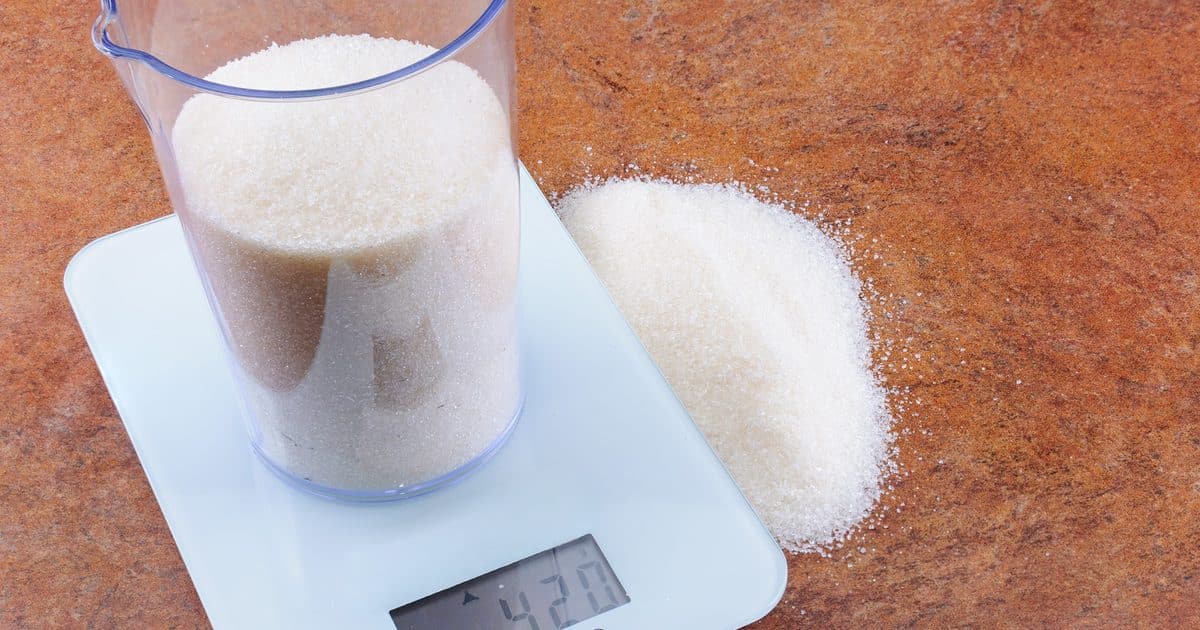
For a home baker, the math is straightforward. A recipe calling for 200 grams of sugar can tolerate a reduction of 20 to 30 grams without the result changing in any detectable way. That's not nothing — over time and across multiple recipes, those reductions add up significantly.
Why the palate adapts to less sugar
One of the more compelling points Préalpato makes is that the human palate adjusts. When you gradually reduce sugar across your baking, your taste perception recalibrates. What once seemed balanced starts to taste cloying. What once seemed barely sweet becomes satisfying. This isn't wishful thinking — it's how sensory adaptation works. The implication is that the 10–15 % reduction isn't just a one-time tweak but a starting point for a longer shift in how you approach sweetness in pastry.
The hard limit: why you can't just keep cutting
Beyond that threshold, the consequences are real. Sugar in baking does far more than sweeten. It retains moisture, contributes to the Maillard reaction that creates golden crusts, stabilizes foams, and affects the setting of jams and confections. Remove too much without reformulating the recipe, and you don't just get a less sweet result — you get a different product entirely. Préalpato is direct about this: taking too many liberties risks ruining the whole preparation.
Desseralité — the philosophy behind the technique
The 10–15 % rule doesn't exist in isolation. It flows from a broader way of thinking about desserts that Préalpato has developed with Alain Ducasse under the banner of desseralité. The core idea is that great desserts don't need to be built on sugar — they need to be built on the inherent qualities of their ingredients.
Desseralité is a culinary philosophy co-developed by Jessica Préalpato and Alain Ducasse. It advocates returning desserts to their natural essence — using the intrinsic flavors of seasonal, ripe ingredients rather than masking them with added sugar.
This philosophy reframes the entire question of sugar reduction. Instead of asking "how much can I take out?" it asks "how much do I actually need?" The answer, in the desseralité framework, is often: far less than traditional recipes assume.
Practical techniques to cut sugar without losing flavor
Préalpato doesn't stop at the percentage. She offers concrete methods for reducing added sugar by leaning on ingredients that bring their own natural sweetness and complexity.
Using ripe fruit as a natural sweetener
For jams and preserves, the approach is direct: use very ripe fruit. Fruit at peak ripeness carries concentrated natural sugars and more developed flavor compounds. When the fruit itself is doing the heavy lifting, the need for added sugar drops dramatically. This is a technique any home cook can apply immediately, and it works across a wide range of preserves.
Choosing the right fruit at the right season is the other half of that equation. Seasonal produce at its peak is sweeter and more aromatic than fruit picked early for transport. A perfectly ripe summer peach needs almost nothing added. An out-of-season peach, hard and pale, needs sugar to compensate for what it lacks — which is exactly the trap desseralité is designed to avoid. The principle applies to cooking with seasonal ingredients more broadly: quality inputs reduce the need for correction.
Unexpected substitutions — prunes and marmalade
Two of Préalpato's more inventive suggestions involve ingredients not typically associated with reducing sugar. Prune paste can replace sugar in sablé biscuits, bringing natural sweetness alongside a depth of flavor that white sugar simply cannot offer. The result is a biscuit with more character, not less.
And for frozen desserts, she proposes making sorbet from marmalade. Marmalade already contains fruit, pectin, and concentrated flavor — the infrastructure of a sorbet is already there. This kind of lateral thinking is at the heart of the desseralité approach: instead of subtracting sugar and accepting a diminished result, you substitute intelligently and often end up with something more interesting than the original.
Prune paste works particularly well as a sugar substitute in shortbread-style biscuits. It adds moisture, natural sweetness, and a subtle complexity that granulated sugar cannot replicate.
These aren't compromises. They're upgrades — provided you stay within the structural limits of the recipe and don't attempt to overhaul the sugar content all at once. The 10–15 % reduction is the safe zone. Everything else Préalpato recommends builds on top of that foundation, for bakers willing to rethink what a dessert can be when it's no longer defined by how sweet it is. Much like understanding the role of specific ingredients in any crafted recipe — whether in the kitchen or elsewhere — the key is knowing what each component actually does before deciding how much to change it.