Baked apples are one of those rare desserts that are both genuinely comforting and naturally healthy. With just 4 apples, 50 g of butter, honey, and cinnamon, you get a warm, fragrant treat ready in 30 minutes — no fuss, no guilt.
There's a reason this recipe has been passed down through generations. Baked apples require almost no technique, a handful of ingredients, and they deliver every single time. Perfect for a winter evening, equally good as a dessert after dinner or a late-afternoon snack, they sit somewhere between nostalgia and good sense.
And yet, not all baked apples are equal. The variety you choose, whether you keep the skin on, what you stuff inside — each of these small decisions shapes the final result entirely.
Choosing the right apple variety makes all the difference
The apple is the recipe. Everything else is just support. So picking the wrong variety can turn a beautiful dessert into a mushy disappointment or, worse, a rock-hard fruit that never softens.
Apple varieties that hold up to heat
For baked apples that keep their shape and develop a tender but structured texture, three varieties consistently perform well: Pink Lady, Granny Smith, and the Golden du Limousin. The Golden du Limousin, a regional French variety with a protected designation of origin, is particularly appreciated for its balance between sweetness and firmness when cooked.
Some varieties will give you a more "compote-like" texture after 30 minutes at 180°C — softer, almost melting. Others stay firmer and hold the filling better. Neither is wrong; it depends on what you're after. But if this is your first time making baked apples, a Pink Lady or Granny Smith gives the most predictable, satisfying result.
A note on the skin
Keeping the skin on is not optional — it's what holds the apple together during cooking. Without it, the fruit collapses. But if you're leaving the skin on, the apple needs to be clean. Opt for bio (organic) apples whenever possible, since the skin goes directly into the dish and onto the plate. A thorough wash is the minimum if organic isn't available.
Always choose organic apples when keeping the skin on. The peel is what holds the fruit’s structure during baking — and it’s the part most likely to carry pesticide residues.
The recipe in 3 steps
This is where the "grandma" label earns its place. The method is stripped down to its essentials: 3 steps, no special equipment beyond a vide-pomme (apple corer), and a standard oven.
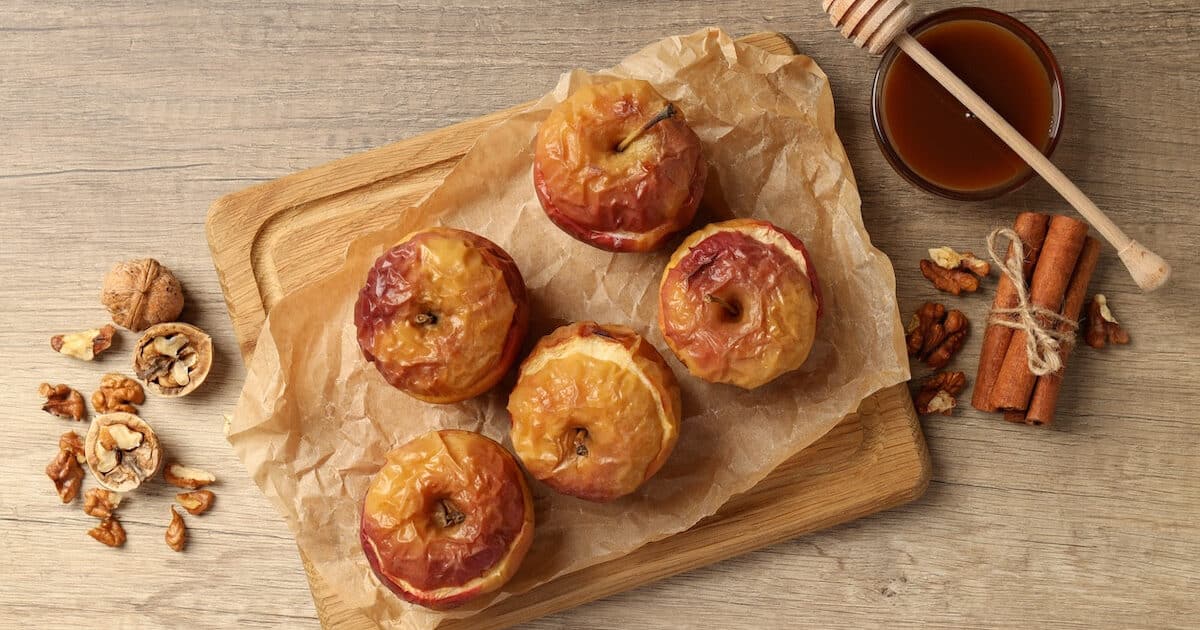
Start by washing the apples thoroughly, then core them using the apple corer — remove the center cleanly without piercing the bottom, so the filling stays in place. Place the 4 apples in an oven-safe dish with a small amount of water at the bottom. This prevents the apples from drying out and creates a gentle steam environment inside the oven.
Then comes the filling. Spoon honey into the hollow center of each apple, sprinkle generously with cinnamon, and place a portion of 50 g of butter divided across the four apples on top. Slide the dish into an oven preheated to 180°C and bake for 30 minutes.
Résultat: soft, golden, fragrant apples with a caramelized filling that pools at the base of each fruit. The butter and honey melt together into a light syrup that coats the skin and perfumes the whole kitchen.
at 180°C — all you need to make perfect baked apples from scratch
Variations worth trying
The base recipe is honey and cinnamon. But the filling is where you can make this dessert your own, and a few substitutions are worth knowing about.
Swapping the sweetener
Jam works as a direct replacement for honey — it melts into the apple during cooking and adds a more intense fruit flavor, depending on the variety you choose. Apricot jam pairs particularly well with Golden apples. If you're thinking about reducing sugar in your baking more broadly, it's worth knowing that a pastry chef confirms you can remove a meaningful portion of sugar from most recipes without compromising the final texture.
Adding texture and depth
Crushed walnuts or pecans added to the filling bring crunch and a nutty richness that contrasts nicely with the soft apple. They also make the dessert more filling — relevant if you're serving it as a standalone snack rather than a light finish to a meal.
Vanilla can replace cinnamon entirely for a softer, creamier aromatic profile. The two spices lead to very different results: cinnamon is warming and slightly spiced, vanilla is rounder and more subtle. Both work. It's a matter of preference and occasion.
For a more nourishing winter dessert, pairing baked apples with a few anti-inflammatory snacks prepared quickly can turn a simple treat into a genuinely balanced moment. And if you tend to finish the evening with a hot drink, the healthiest tea option alongside a warm baked apple makes for a hard-to-beat combination.
- Ready in 30 minutes with minimal prep
- Naturally sweetened with honey — no refined sugar needed
- Highly adaptable (nuts, jam, vanilla, pecans)
- Works as dessert or afternoon snack
- Ideal for winter, genuinely comforting
- Requires an apple corer for clean results
- Texture varies significantly by apple variety
- Organic apples recommended — slightly higher cost
Baked apples are the kind of recipe that doesn't ask much of you. A bit of prep, a reliable oven, and the patience to wait 30 minutes while the kitchen fills with the smell of warm cinnamon and caramelized honey. The Golden du Limousin, the Pink Lady, the Granny Smith — each brings something slightly different to the dish, but all of them arrive at the same place: a dessert that's wholesome, honest, and genuinely good.