Fluffy crepes are one of those rare recipes that work for everyone, every season, with just four pantry staples. This vanilla crepe batter — built on 250 g of flour, 3 eggs, 50 cl of milk, and a sachet of vanilla sugar — produces thin, tender crepes that hold up beautifully whether you pile them with chocolate spread or fill them with ham and béchamel.
There's something almost unfair about how simple this recipe is. No special equipment, no obscure ingredients, no technique that takes years to master. And yet the result, when you follow a handful of small but deliberate steps, is consistently soft, golden, and satisfying — the kind of snack that turns an ordinary afternoon into something worth sitting down for.
The fluffy crepe batter starts with the right order of operations
The sequence matters here. Start by combining the flour and the sachet of vanilla sugar in a large mixing bowl, then add the 3 eggs directly into the dry mix. Work them in well before adding any liquid — this is what prevents a lumpy batter later. Once the eggs are incorporated, pour in the 50 cl of milk gradually, stirring constantly as you go. Rushing the milk addition is the most common mistake: adding it all at once creates pockets of unhydrated flour that are genuinely difficult to break down afterward.
One detail that makes a real difference: all your ingredients should be at room temperature before you start. Cold milk hitting a flour-and-egg paste causes the batter to tighten and clump. If you've pulled your eggs and milk straight from the fridge, give them 15 to 20 minutes on the counter first. The batter will come together noticeably smoother.
The resting time is non-negotiable
Once the batter is mixed, leave it to rest for 30 minutes at room temperature. This rest period allows the flour to fully hydrate and the gluten strands to relax, which directly translates to a more supple, less rubbery crepe. Skipping it is tempting when you're hungry — but the texture difference is real.
If you still spot a few lumps after resting, a quick pass with an immersion blender or a standard blender will fix it in seconds. The batter should be smooth, slightly fluid, and coat the back of a spoon lightly.
Optional flavor additions that work in the batter
The vanilla sugar version is the classic, but the batter takes well to other aromatics. A splash of rum, some lemon zest, a few vanilla bean seeds, or a tablespoon of cocoa powder all fold in cleanly before the rest period. These additions don't change the technique — they just shift the flavor profile depending on what you're serving the crepes with.
If you want to make a savory version of this batter, simply omit the vanilla sugar. The proportions of flour, eggs, and milk stay exactly the same — the result is a neutral, versatile crepe that pairs perfectly with savory fillings.
Cooking fluffy crepes in a pan without ruining them
Heat your pan over medium-high heat and butter it lightly before each crepe. Too much butter and the edges fry rather than cook evenly; too little and the crepe sticks. A small knob of butter, spread with a paper towel or a brush, is the right amount.
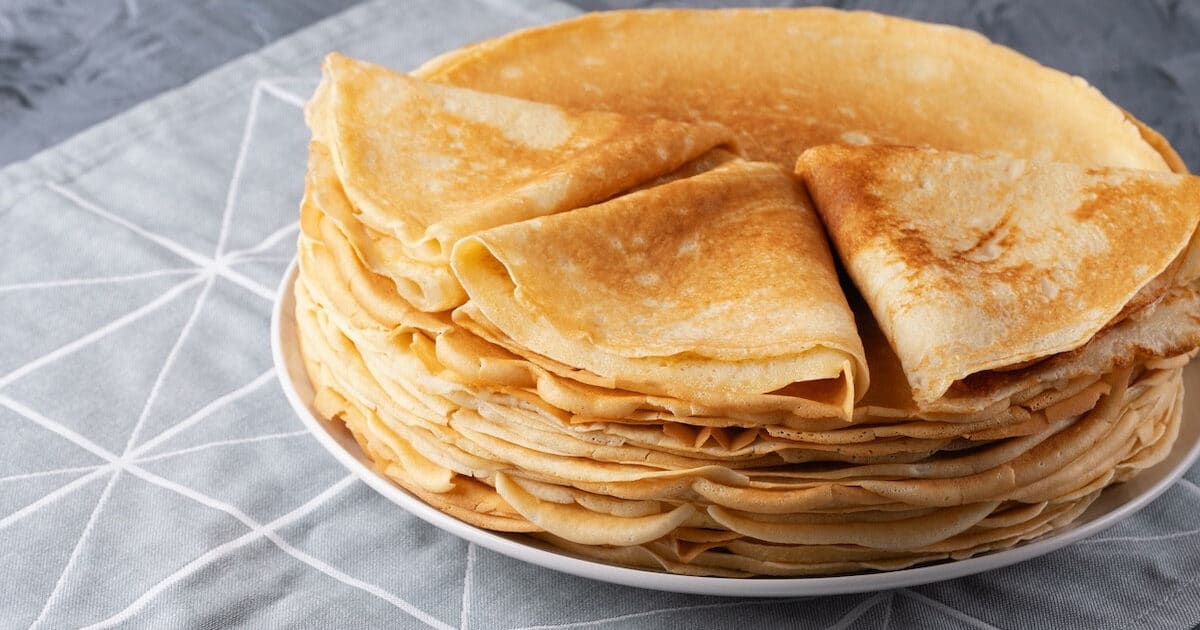
Pour a ladleful of batter into the center of the pan and immediately tilt the pan in a circular motion to spread it into a thin, even round. The crepe is ready to flip when the edges start to lift slightly and the surface looks dry. One flip, another 30 seconds, and it's done. The goal is a light golden color with a few deeper brown spots — not pale and limp, not crispy and overcooked.
Keeping cooked crepes soft until serving
Stack the finished crepes on a plate and cover them with a clean kitchen towel. This traps just enough steam to keep the crepes moist and pliable rather than drying out between batches. It's a small habit that makes a significant difference, especially if you're making a large stack for the whole family.
This recipe is a natural fit for la Chandeleur, the French holiday dedicated entirely to crepe-making, but honestly the batter is simple enough to justify on any Tuesday afternoon. If you enjoy homemade recipes that come together with minimal ingredients, this one belongs in your regular rotation.
Sweet and savory toppings that transform the same crepe
The batter is a blank canvas, and what you put on top is where the recipe becomes personal.
- Chocolate spread or melted chocolate
- Jam or honey
- Butter and a squeeze of lemon
- Fresh fruit and whipped cream
- Béchamel, ham, and melted cheese
- Spinach and goat cheese
- Mushrooms and chicken
The savory route turns crepes from a snack into a proper main course. A classic béchamel with ham and cheese is the most satisfying version — rich, filling, and genuinely comforting on a cold evening. The spinach and goat cheese combination is lighter but equally good. And if you're curious about reducing sugar in your baking without compromising texture, the sweet version of this batter is actually a good place to experiment — the vanilla sugar can be adjusted or swapped without destabilizing the recipe.
For the sweet versions, the pairing works in both directions. A warm crepe with honey and fresh fruit is light and refreshing. The same crepe with chocolate spread and chantilly is indulgent without being heavy. Both are equally valid depending on the mood, the season, or who's sitting at the table. If you're looking for other quick homemade snack ideas to round out your repertoire, crepes fit naturally alongside simpler preparations that don't require much planning ahead.
The recipe scales up easily for a crowd and the batter can be prepared in advance. Once you've made it a few times, the whole process — mixing, resting, cooking — takes under an hour from start to first crepe on the plate. That's a hard ratio to beat for something this consistently good.