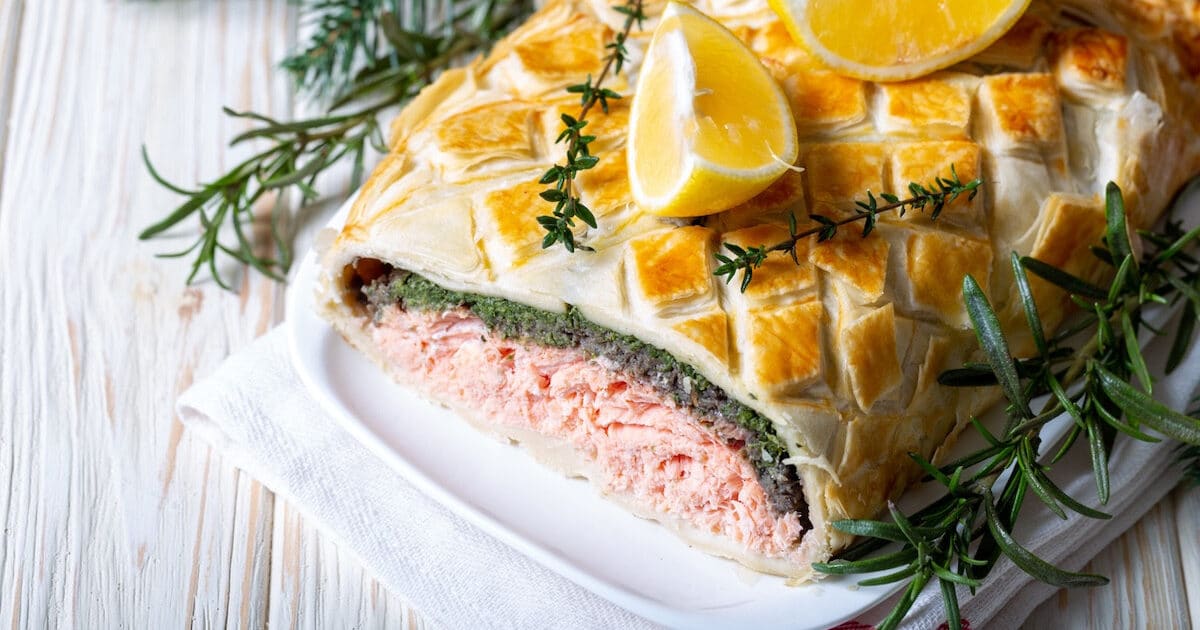
Salmon Wellington is one of those showstopper dishes that looks far more complex than it actually is. Wrapped in golden puff pastry with a savory spinach and mushroom filling, this festive centerpiece serves 4 and comes together in just 30 minutes of oven time — with one simple trick that makes all the difference.
Few dishes carry the same visual impact as a Wellington arriving at the table. The crackling pastry, the steam rising from the first cut, the layers of color revealed inside — it delivers a moment. And while most people associate this format with beef, the salmon version is every bit as satisfying, arguably more versatile, and genuinely accessible for a home cook.
This is a recipe built for celebrations: holiday dinners, a dressed-up Sunday lunch, or any occasion where the food should feel like an event without requiring professional skills.
The ingredients that make salmon Wellington work
The core concept is simple. A 600 g salmon fillet sits at the center of everything, wrapped in a single sheet of rectangular puff pastry alongside a filling of 200 g fresh spinach and 150 g Paris mushrooms. That filling — called a duxelles — is what separates a Wellington from a basic pastry parcel.
To build the duxelles, the mushrooms and 1 small onion or shallot are blitzed together, then cooked down in 20 g of salted butter over a pan for 5 to 10 minutes until most of the moisture has evaporated. The spinach goes in next, wilting and releasing its water. And this is where the first critical decision happens.
Why draining the filling is non-negotiable
Wet filling is the enemy of good pastry. If the spinach-mushroom mixture isn't properly drained before it goes anywhere near the pastry, the moisture will seep through during baking and leave the bottom layer soggy and dense instead of crisp and golden. Take the time to press out the liquid — it takes an extra minute and completely changes the result.
The same logic applies if you're working with frozen spinach as a substitute for fresh. Frozen leaves hold significantly more water and must be left to thaw and drain fully before cooking. Skipping this step doesn't just affect texture; it can prevent the pastry from cooking through at all.
Whether using fresh or frozen spinach, always drain the filling thoroughly before assembling. Excess water is the main reason puff pastry turns soft rather than crisp during baking.
Salmon is an excellent choice here beyond its flavor profile. It's one of the fish richest in omega-3 fatty acids, making this festive dish genuinely nutritious alongside its visual appeal.
The assembly method and the magic secret
Once the filling has cooled and been drained, the actual assembly moves quickly. Unroll the puff pastry flat onto a baking sheet. Place the salmon fillet in the center, season it with pepper, and spoon the spinach and mushroom mixture over the top. Then fold the pastry around everything, pressing the edges together to seal the package completely.
The egg wash and the scoring technique
Two finishing steps define the final result. First, beat 1 egg yolk with a little water and brush it generously over the entire surface of the pastry. This is what produces the deep, glossy, amber-brown crust that makes the dish look as good as it tastes.
Second — and this is the trick that trips people up — use the back of a knife blade to score a light pattern of diagonal lines across the top. The operative word is "light." The lines should mark the surface, creating a decorative effect and allowing steam to escape, but they must not cut through the pastry. Piercing all the way through breaks the seal, lets the filling leak, and prevents the pastry from puffing up properly. A confident, shallow stroke is all it takes.
Score the pastry surface with a knife blade — but never press all the way through. Shallow decorative lines let steam escape without breaking the seal, which is what allows the pastry to rise and turn golden.
Baking at 200 °C for exactly 30 minutes
The oven does the rest. At 200 °C, the Wellington bakes for 30 minutes, during which the pastry puffs, browns, and crisps while the salmon cooks gently inside. The result should be a package that looks visibly risen and uniformly golden across the surface.
But the work isn't quite done when the timer goes off. Cutting into a Wellington straight from the oven is a mistake. The filling needs a few minutes to settle — otherwise the layers compress and the clean cross-section that makes this dish so striking simply won't appear. Let it rest, then use a bread knife to slice it. The serrated blade cuts through puff pastry without crushing it, preserving both the layers and the presentation.
What to serve alongside the puff pastry salmon
A dish this rich and structured pairs best with something smooth and earthy on the side. Sweet potato mash works beautifully, its natural sweetness balancing the savory filling. Celeriac purée brings a slightly nuttier, more refined note. A classic potato mash — or a combination of potato and one of those two roots — gives the plate a comforting, grounded quality that complements the lightness of the pastry.
For something brighter, roasted seasonal vegetables add color and texture contrast. And for those who want a sauce, a simple blend of fromage blanc, lemon juice, and chives served on the side adds acidity and freshness without competing with the Wellington itself.
in the oven at 200 °C — all it takes to get a perfectly golden salmon Wellington for 4
The beauty of this salmon Wellington recipe is that it scales naturally for entertaining. It looks like the kind of dish that requires training and patience. But with properly drained filling, a careful score on the pastry surface, and a few minutes of resting time before slicing, the result is exactly what a festive table deserves: something that genuinely impresses, without the stress. If you enjoy exploring recipes that reward small technical details — like knowing the exact moment to pull something from the heat — this Wellington will quickly become a seasonal staple.