Cooking a soft-boiled egg in an air fryer takes between 6 and 10 minutes depending on the temperature you choose. At 180 °C, 6 to 7 minutes delivers a firm white with a runny, golden yolk. The method is reliable, hands-off, and surprisingly precise once you know the variables.
The air fryer has quietly become one of the most versatile tools in the modern kitchen. Most people use it for fries or chicken wings, but it handles eggs remarkably well — no boiling water, no hovering over a pot, no guessing. Getting a perfect soft-boiled egg with a liquid center is entirely achievable, as long as you respect a few non-negotiable rules.
And the results speak for themselves. When done right, the white is fully opaque and set, while the yolk remains flowing and rich. That's the definition of a proper soft-boiled egg: two textures in one shell.
Soft-boiled egg in air fryer: the exact cooking times
The most common approach is 180 °C, and it's the one that gives you the most control. At this temperature, 6 minutes is the sweet spot for medium-sized eggs with a fully runny yolk. Push it to 7 minutes and the yolk becomes creamy rather than liquid — still soft, still glossy, but slightly thicker at the center. That's the setting recommended by Cuisine Actuelle for a reliably beautiful result.
The alternative is a lower temperature: 130 °C for 9 to 10 minutes. This slower approach produces a very tender white, almost silky, with a yolk that's runny but not as dramatically liquid as the high-heat version. It's a gentler cook, closer to what you'd get from a slow-simmered pot.
| Method | Temperature | Time | Result |
|---|---|---|---|
| Air fryer (runny yolk) | 180 °C | 6 min | Firm white, fully liquid yolk |
| Air fryer (creamy yolk) | 180 °C | 7 min | Firm white, thick creamy yolk |
| Air fryer (tender white) | 130 °C | 9–10 min | Silky white, soft runny yolk |
| Saucepan | 100 °C (simmering) | 4–6 min | Classic soft-boiled result |
How the air fryer compares to the saucepan method
The traditional saucepan method takes 4 to 6 minutes in gently simmering water. It's fast, but it demands attention. The heat is harder to control, the transition from soft-boiled to hard-boiled happens in seconds, and a forgotten timer means a ruined egg. The air fryer is slower at 180 °C, but the dry heat is more forgiving. There's no rolling boil to crack the shell, no risk of uneven cooking from turbulent water.
Concrètement, the air fryer doesn't replace the saucepan for speed. But it trades that speed for consistency, which matters when you're cooking multiple eggs or multitasking in the kitchen.
Placement in the basket matters
Place the eggs directly in the air fryer basket, in a single layer. That's not optional. Stacking eggs on top of each other creates uneven airflow, and the result is unpredictable — some eggs overdone, others underdone. One layer, every time.
The preparation steps that determine success
Take the eggs out of the fridge early
This is the step most people skip, and it's the one that causes the most failures. Cold eggs going straight into a hot air fryer cook unevenly: the white may set too fast on the outside while the interior stays cold. The fix is simple — remove your eggs from the refrigerator at least 30 minutes before cooking. Room-temperature eggs respond to heat predictably and uniformly.
Skipping the cold-water bath after cooking is one of the most common mistakes. Without it, residual heat inside the shell continues cooking the egg — and your runny yolk firms up before you even crack it open.
The cold water bath is non-negotiable
The moment your timer goes off, transfer the eggs immediately into very cold or ice water. This stops the cooking process dead. Without this step, the carryover heat inside the shell keeps working on the yolk, and what should have been liquid becomes set. A few minutes in the cold bath is all it takes. Cuisine Actuelle specifically recommends running the eggs under cold water right after cooking to halt the process instantly.
Serving a soft-boiled egg from the air fryer
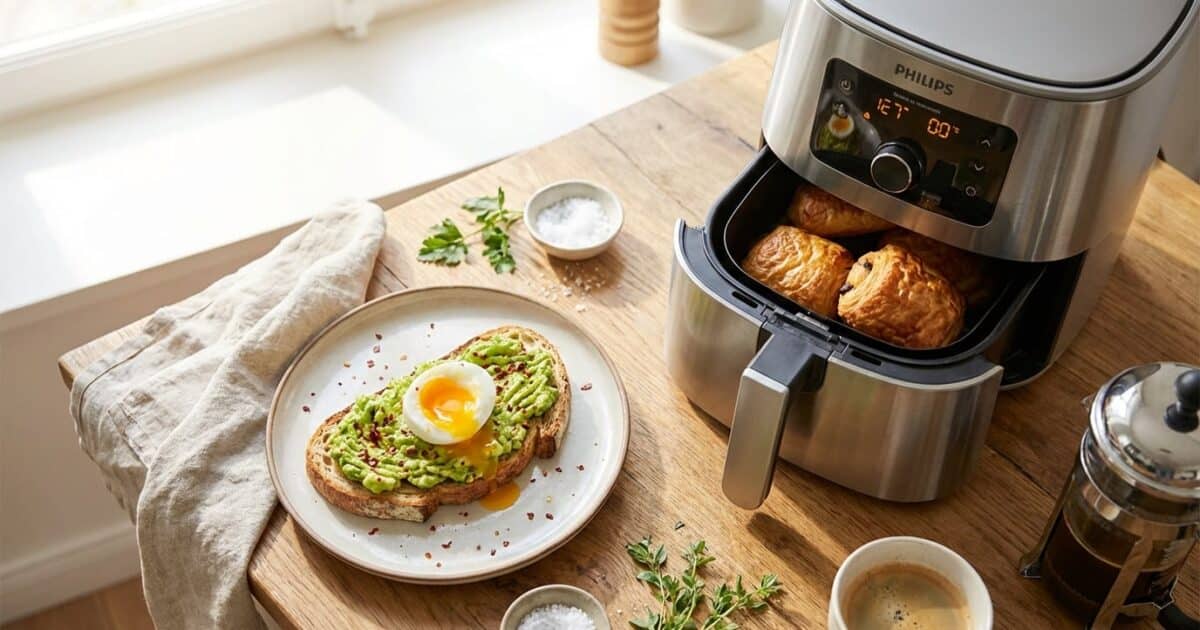
Once peeled, a perfectly cooked air fryer soft-boiled egg is a versatile ingredient. The simplest and most satisfying way to serve it: over a slice of toast spread with crushed avocado, finished with a drizzle of olive oil, salt, pepper, and a pinch of chili flakes. The runny yolk breaks over the avocado and creates a sauce that needs nothing else.
But the egg works just as well over a grain bowl, sliced onto a salad, or served alongside a more elaborate dish. The cooking method doesn't limit the application — it just guarantees the texture. And that texture, that balance between a firm white and a liquid yolk, is what makes the soft-boiled egg worth getting right. If you enjoy experimenting with precise, technique-driven recipes, you might also appreciate how reducing sugar in baked goods follows the same logic: small adjustments, measurable results.
Every air fryer model runs slightly differently. On your first attempt, start at 6 minutes at 180 °C, then adjust by 30-second increments based on your result. Once you find your machine’s sweet spot, it’s perfectly repeatable every time.
The air fryer egg is also a good gateway into more adventurous cooking. Once you're comfortable with temperature and timing, the same principles apply to other preparations — much like mastering a base dough opens the door to recipes like crispy Moroccan sfenj, where technique and timing are everything.
The soft-boiled egg in the air fryer rewards precision. Get the temperature right, give the eggs time to warm up, and never skip the ice bath. Do those three things and the result is consistent, elegant, and exactly as runny as it should be.