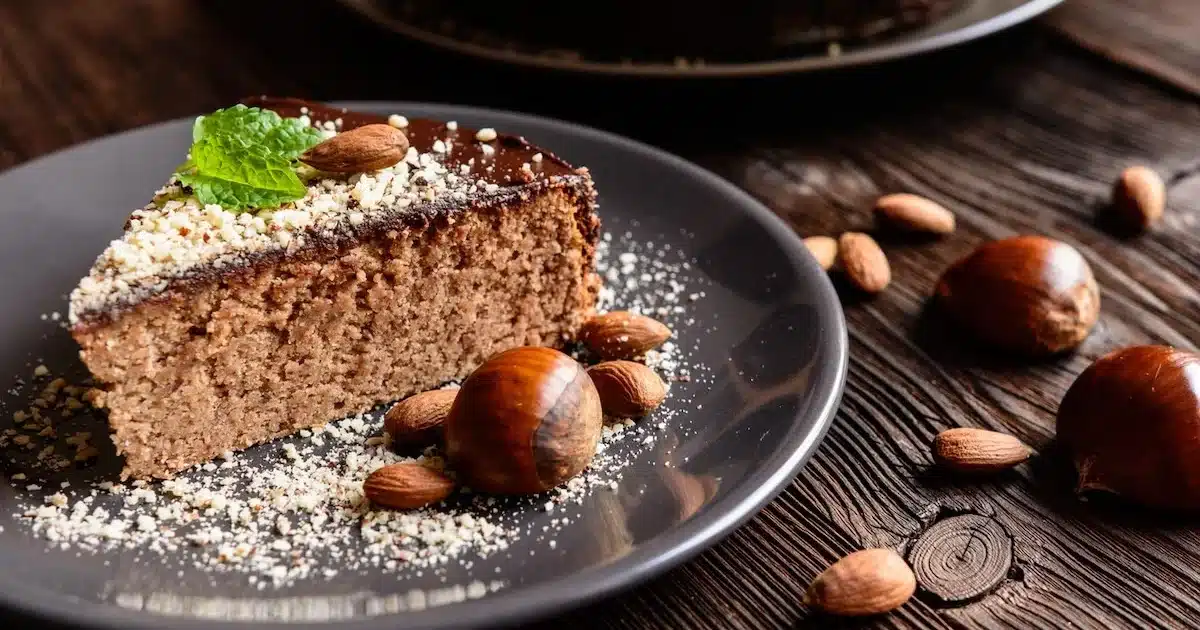
Chestnut cake is the ultimate winter comfort bake: dense, tender, and fragrant with the earthy sweetness of chestnuts, it brings the whole family together around the table during the Christmas holidays. Ready in under an hour with just a handful of pantry staples, this recipe also adapts beautifully for a plant-based diet.
There is something deeply nostalgic about the smell of chestnut cake baking in the oven. It carries the warmth of winter kitchens, the promise of a slow December afternoon, and that particular kind of indulgence that only seasonal baking delivers. And the best part? The recipe is genuinely simple.
Whether you are baking for young children or the most demanding adults at the table, this chestnut cake hits every note: soft crumb, rich flavor, and a texture that stays moist for days when stored properly.
The ingredient list for a perfect chestnut cake
The base of this recipe relies on a blend of two flours. Chestnut flour (120 g) brings the signature nutty depth and natural sweetness, while plain wheat flour (80 g) keeps the structure light enough to avoid a gummy crumb. To that, add 1 sachet of baking powder and a pinch of salt.
On the wet side: 3 whole eggs, 120 g of light brown sugar, 100 g of melted butter, and 10 cl of milk. The sugar adds a gentle caramel warmth that pairs beautifully with the chestnut. And then come the star pieces: 100 g of cooked chestnuts (from a jar or vacuum-packed), roughly broken up by hand before being folded into the batter.
Optional add-ins that elevate the loaf
The base recipe stands perfectly on its own, but a few optional extras can take it further. 50 g of milk chocolate chips melt into pockets of richness throughout the loaf. 50 g of toasted and crushed hazelnuts add crunch and a roasted note that complements the chestnut. A pinch of vanilla powder or a pinch of cinnamon both work as background warmth.
For adults who enjoy a more festive edge, a small splash of rum folds in quietly without overpowering the bake. It is entirely optional, but for the more indulgent guests at the table, it makes a real difference.
Placing a small bowl of water at the bottom of the oven while baking creates extra moisture in the cavity, which helps the chestnut cake develop a softer, more tender crumb.
How to bake this chestnut loaf in 5 steps
The preparation follows a classic cake method, kept deliberately short to protect the texture. Over-mixing is the main enemy here: working the batter too hard breaks down the structure and strips the loaf of its characteristic softness. Keep every mixing step brief once the wet and dry ingredients come together.
Step-by-step preparation
- Preheat the oven to 180°C and prepare a loaf tin by buttering it or lining it with baking parchment.
- In a bowl, combine the chestnut flour, wheat flour, baking powder, and salt.
- In a separate bowl, whisk the eggs and brown sugar together until the mixture turns pale and slightly airy.
- Add the melted butter and milk, then mix until smooth.
- Pour the wet mixture over the dry ingredients and stir briefly. Fold in the roughly broken cooked chestnuts (and any chosen add-ins), then transfer to the tin.
Bake for approximately 40 minutes. To check doneness, insert the tip of a knife into the center of the loaf: it should come out clean and dry. Once out of the oven, leave the cake to cool for 10 minutes before unmoulding. The loaf is at its best eaten slightly warm, but it keeps well for the next day.
For storage, wrap the loaf in a clean kitchen towel rather than cling film. This method maintains the soft interior without making the crust soggy. The following day, a slice reheated for a few seconds in the microwave comes back to life almost as good as fresh. If you enjoy baking comforting treats for the family, this simple baked apple dessert follows a similar philosophy of fuss-free seasonal warmth.
baking time at 180°C for a perfectly tender chestnut loaf
A plant-based chestnut cake that actually works
This recipe adapts to a fully vegan version without sacrificing the moist, dense texture that makes it so appealing. The substitutions are straightforward and each one has a specific logic behind it.
Replacing eggs, butter and milk
Eggs can be swapped out for unsweetened applesauce or mashed ripe bananas, both of which bind the batter and add a subtle natural sweetness. If you enjoy baking with bananas, the same technique appears in this soft banana and chocolate chip muffin recipe, where the fruit acts as both binder and moisture source.
Butter is replaced by plant-based margarine in equal quantity, with no noticeable impact on the final crumb. For the milk, both oat milk and hazelnut milk work particularly well here. Hazelnut milk in particular pairs naturally with the chestnut and the optional crushed hazelnuts, creating a coherent flavour profile throughout. The loaf stays just as soft, just as fragrant, and just as satisfying to slice.
- Richer, more buttery crumb
- Eggs provide a slightly firmer structure
- Traditional flavour profile
- Suitable for dairy-free and egg-free diets
- Banana or applesauce adds natural sweetness
- Hazelnut milk enhances the nutty depth of chestnut flour
Why this cake belongs on your Christmas table
The chestnut cake sits at a rare intersection: it is simple enough for a weeknight bake, yet distinctive enough to serve as a festive dessert during the Christmas holidays. The chestnut flour gives it a depth that standard sponge cakes simply cannot replicate, and the cooked chestnuts folded through the batter add texture and a rustic, seasonal character.
Served slightly warm alongside a cup of tea or a mug of something richer, like a homemade hot chocolate made from real chocolate, this loaf becomes more than just a recipe. It becomes a ritual. The kind that gets requested year after year, by children and adults alike, because it tastes exactly like winter is supposed to taste. Dense, warm, a little earthy, and completely impossible to resist.