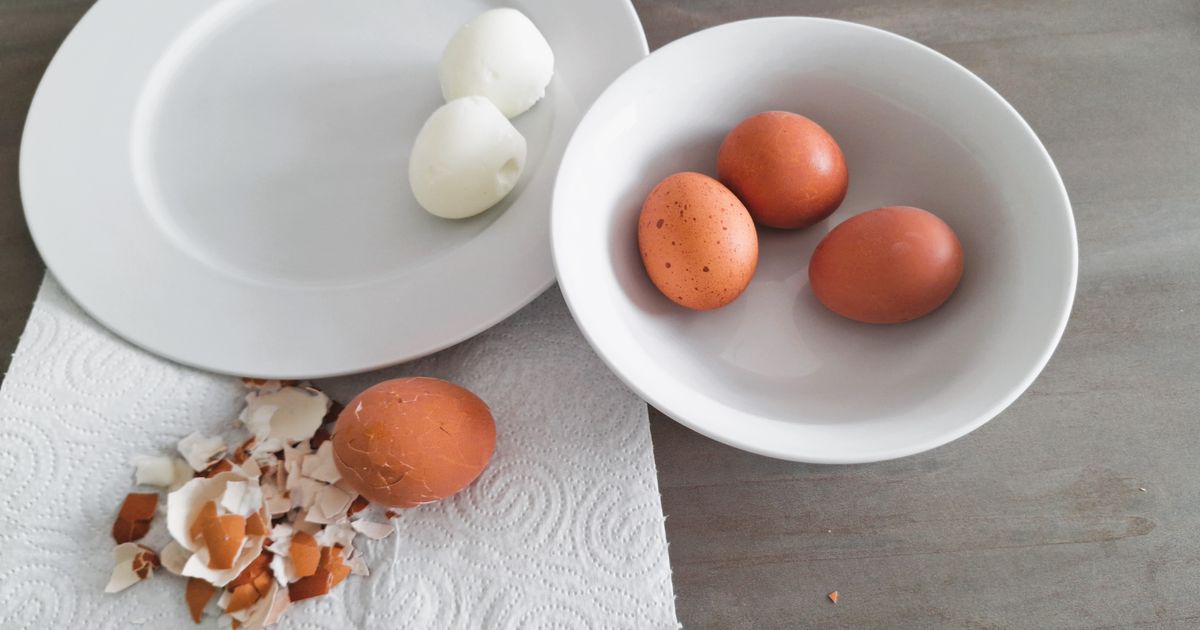
Peeling a hard-boiled egg without tearing it apart comes down to two things: how you cook it and what you do in the next three minutes after. Steam cooking followed by an ice bath is the combination that makes the shell slip off in one clean gesture, every time.
France is in the middle of an egg shortage. At the end of January 2026, supermarket shelves at Leclerc, Carrefour, U, and Lidl are regularly running low, which means every egg that ends up mangled during peeling stings a little more than usual. When supplies are tight, wasting even part of a hard-boiled egg because the shell dragged half the white with it is genuinely frustrating.
And yet, most people still boil their eggs the same way they always have, without questioning whether that method is part of the problem.
Steam cooking changes everything about how a hard-boiled egg peels
The classic approach — dropping eggs into a pot of boiling water — works fine for cooking them through. But it does nothing to help with the membrane that bonds the shell to the white. That membrane is the real culprit behind difficult peeling. When eggs are cooked in boiling water, the membrane stays stubbornly attached, and pulling the shell away means tearing into the egg itself.
Steam cooking solves this differently. The heat is gentler and more even, and the egg is never submerged. The result is a cooked egg whose membrane separates more cleanly from the white, making the shell far easier to remove.
Steam cooking also works beautifully for other delicate preparations. If you enjoy experimenting with egg textures, you might also want to try a soft-boiled egg in an air fryer for a perfectly runny yolk with minimal fuss.
What you need and how to set it up
The equipment is minimal: a casserole and a steamer basket. Pour a small amount of water into the bottom of the casserole, making sure the water level stays below the basket. Bring it to a full boil, then place the eggs directly in the basket. Cover the pot and let them cook for approximately 10 minutes.
That's the entire cooking phase. No complicated timing adjustments, no watching the water level. The steam does the work.
Why the membrane releases under steam
When eggs cook in steam rather than submerged water, the shell and the inner membrane experience slightly different thermal conditions. This subtle difference encourages a minor separation between the membrane and the egg white during cooking, which is exactly what makes the peeling step so much smoother. The shell doesn't grip the white the same way. You're not fighting the egg — you're working with it.
The ice bath is not optional
This is where most people cut corners, and it's exactly where the technique falls apart. The moment the eggs come out of the steamer, they go straight into ice-cold water. Not tap water. Not cool water. A proper ice bath, held for about 3 minutes.
The science behind this is straightforward. The sudden temperature drop — the thermal shock — stops the cooking instantly and causes a slight contraction of the membrane inside the shell. That contraction creates a small gap between the shell and the white. Concrètement, it's that gap that allows the shell to slide off cleanly rather than tear away in fragments.
After the 3-minute ice bath, let the eggs rest for a few more minutes before handling them. The shell will come off without any real effort.
in an ice bath — the minimum time needed to trigger effective thermal shock
Skipping the ice bath, or using lukewarm water instead, eliminates the thermal shock entirely. The membrane stays stuck, and you're back to the frustrating scratching and tearing that ruins the egg. Every kitchen tip about reducing food waste starts with not destroying what you're trying to cook in the first place.
The full peeling method, step by step
Once the eggs have been steamed and chilled properly, the actual peeling is almost anticlimactic. Here is the complete sequence:
- Set up a casserole with a steamer basket, water below the basket level.
- Bring the water to a boil.
- Place eggs in the basket, cover, and cook for ~10 minutes.
- Transfer immediately to a bowl of ice water for ~3 minutes.
- Let the eggs rest a few more minutes.
- Remove the shell — it should come away cleanly, in large pieces, without force.
The "single gesture" part of this method isn't a gimmick. When the steam cooking and ice bath are done correctly, the shell genuinely releases in one smooth motion. There's no scratching, no digging, no lost white.
Steam for 10 minutes + ice bath for 3 minutes = a shell that comes off cleanly. Both steps are necessary. Neither works without the other.
Why bad peeling happens and how to stop repeating it
The three main causes of a shell that won't come off cleanly are a membrane that stayed attached during cooking, heat that wasn't stopped quickly enough after cooking, and a refroidissement that was rushed or skipped entirely. The steam method addresses the first cause directly. The ice bath handles the second and third.
Fresh eggs are also notoriously harder to peel than older ones — the membrane adheres more strongly in a very fresh egg. But even with fresh eggs, the steam-plus-ice-bath method dramatically reduces the problem. The technique compensates for what the egg's age would otherwise make difficult.
And in a context where eggs are harder to come by — with French supermarkets running short supplies through late January 2026 — having a reliable method that doesn't waste a single gram of white is more than just a kitchen trick. It's basic respect for an ingredient that's currently scarce. If you're looking for ways to get more out of every ingredient in your kitchen, the same logic applies to smart food storage habits and understanding which techniques actually preserve quality rather than degrade it. The steam method for hard-boiled eggs is one of those techniques that, once you've tried it, makes the old way feel like unnecessary effort.