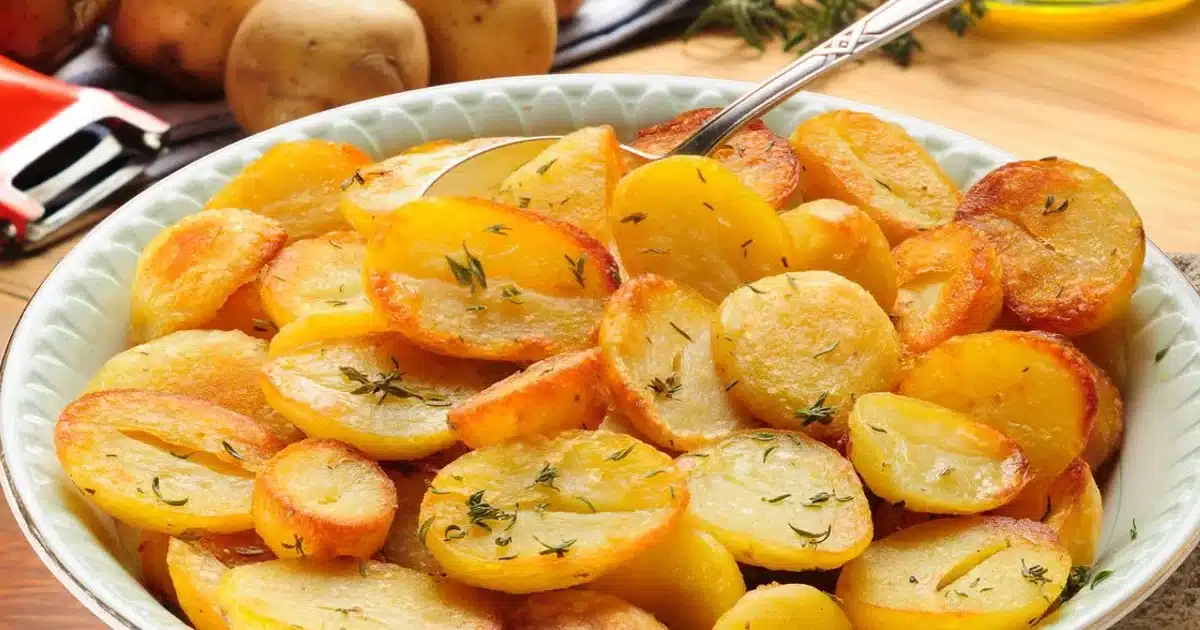
Mayonnaise is the secret ingredient that transforms ordinary oven-roasted potatoes into genuinely crispy, golden wedges without a deep fryer. Coat 1 kg of potatoes with just 6 tablespoons of mayo, follow a precise two-step technique, and soft, pale results become a thing of the past.
Every home cook has faced it: potatoes that come out of the oven looking pale, feeling soft, and tasting like they were steamed rather than roasted. The culprit is almost always the same. Potatoes contain a significant amount of water, and when that moisture escapes during cooking, it creates steam inside the oven that effectively poaches the pieces instead of crisping them up. Pile them too close together on the baking sheet, and the problem compounds instantly.
The fix turns out to be sitting in most refrigerators already.
Mayonnaise as a roasting agent changes everything
Culinary expert Erika Kwee, writing for Simply Recipes and cited by L'Express UK, points to mayonnaise as the ingredient that solves the crispiness problem most people don't realize they have. At first glance, coating potatoes in mayo sounds counterintuitive. But the science behind it is straightforward once you understand what mayonnaise actually is.
Mayonnaise is an emulsion of eggs and oil, stabilized with vinegar or lemon juice. That combination behaves very differently from a simple drizzle of olive oil. The egg proteins and fats conduct heat rapidly and coat each piece of potato in a thin, even layer that browns quickly and uniformly. The result is a surface that crisps up at oven temperature without requiring the extreme heat of a deep fryer.
Why oil alone doesn't deliver the same crunch
Plain oil tends to pool at the bottom of the baking dish or slide off the potato surface during cooking. Mayonnaise, because of its emulsified structure, clings. Every surface of every piece stays coated throughout the entire roasting time, meaning the browning is consistent rather than patchy. The difference in texture between a potato coated in mayo and one simply tossed in oil is noticeable from the first bite: a genuinely crispy exterior with a soft, fluffy center.
The optional boost: fine semolina or cornstarch
For anyone wanting to push the crispiness even further, dusting the coated potatoes with fine semolina or cornstarch before they go into the oven adds another layer of texture. Both ingredients absorb residual surface moisture and create a slightly rougher coating that crisps even more aggressively under heat. This step is optional but worth trying if you want results closer to deep-fried without the oil.
The two-step method that makes the technique work
The mayonnaise coating alone is not quite enough. The technique relies on a pre-cooking step that most people skip, and skipping it is exactly why oven potatoes so often disappoint.
The pre-boiling step is what creates the slightly roughed-up surface that allows the mayonnaise to grip the potato properly. Without it, even the best coating will slide and produce uneven results.
Start by preheating the oven to 200 °C (or 180 °C on fan-assisted mode). Peel the potatoes if preferred, then cut them into evenly sized medium pieces — uniformity here matters because uneven pieces cook at different rates. Bring a pot of salted water to a boil and par-cook the potatoes for 5 to 7 minutes. They should be just barely tender at the edges, not cooked through.
Drain them thoroughly and let them sit for a few minutes to dry out. Then comes the step that actually makes the technique work: shake the colander gently so the potato edges roughen up slightly. That textured surface grips the mayonnaise far better than a smooth one would. Transfer to a large bowl, add the 6 tablespoons of mayonnaise, and toss until every piece is evenly coated. Season with salt, pepper, garlic, paprika, or whatever herbs suit the dish.
Spread the pieces on a baking sheet lined with parchment paper, making sure to space them well. Crowding the pan is the single most common mistake — pieces touching each other trap steam and turn soft. Roast for 20 to 25 minutes, turning once at the halfway point for even coloring. Serve immediately while the crust is still at its best.
of mayonnaise for 1 kg of potatoes — the ratio to remember for perfectly crispy roasted potatoes
Choosing the right potato variety
Not every potato responds equally well to this method. The technique works best with firm-fleshed varieties that hold their shape during par-boiling and don't turn to mush before they even reach the oven. The recommended options are Charlotte, Amandine, and Ratte — all three are known for their dense, waxy texture that survives the pre-cooking step intact and develops a satisfying crust in the oven.
Floury varieties like Maris Piper or King Edward can work in a pinch, but they tend to break apart during the shaking step, leaving you with uneven pieces that cook inconsistently. If you're also looking for other ways to use potatoes beyond roasting, a warming potato and leek velouté is another excellent use for firm-fleshed varieties.
What to serve with crispy roasted potatoes
These oven-roasted potatoes are affordable, filling, and versatile enough to work alongside almost any main. They pair naturally with roast chicken, a Sunday roast, or something as simple as a fried egg. The crust holds up well even against sauces, which makes them a better side dish than most oven potato recipes that go limp the moment they hit a plate.
For a more complete weeknight meal, they work particularly well alongside a homemade chicken cordon bleu or a creamy mushroom risotto-style rice. Both dishes take roughly the same time to prepare, making it easy to time everything together.
- Mayonnaise clings evenly to every surface, ensuring consistent browning
- Par-boiling creates a rough texture that grips the coating
- No deep fryer needed — oven temperature does the work
- Works with inexpensive, widely available ingredients
- Crowding the baking sheet traps steam and produces soft results
- Skipping the par-boil leaves the surface too smooth for the coating to grip
- Using floury potato varieties that break apart during shaking
- Not turning the potatoes at the halfway point leads to uneven color
The technique also scales easily. The ratio of 1 kg of potatoes to 6 tablespoons of mayonnaise is simple to remember and easy to multiply for larger groups. For anyone who has given up on oven-roasted potatoes because the results never matched the effort, this single swap makes the difference between a side dish that gets left on the plate and one that disappears first.