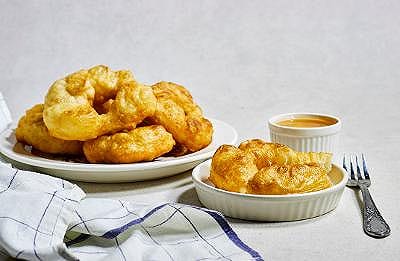
Sfenj are traditional Moroccan doughnuts eaten at the breaking of the fast during Ramadan. Light, airy, and fried until golden, they require a well-risen dough, oil at the right temperature, and a few precise gestures to achieve that signature crispy texture without excess grease.
Ramadan brings with it a whole universe of flavors, and among the most anticipated is the sfenj. These Moroccan beignets appear every evening at the ftour, the moment the fast is broken, alongside a glass of mint tea or a bowl of café au lait. They are simple in their ingredients but demanding in their technique, and the difference between a flat, greasy doughnut and a beautifully airy one comes down to a handful of details that are easy to get right once you know them.
Evana Lemaire walks through the full recipe and the key tips that make the difference between a decent sfenj and a genuinely great one.
The sfenj dough: levure, hydration, and the first rise
The foundation of a good sfenj is the dough, and the dough lives or dies with the levure (yeast). Whether you use fresh yeast or dry yeast matters less than how you treat it. If using dry yeast, the substitution is straightforward: 5 g of dry yeast replaces 15 g of fresh yeast. But dry yeast needs to be mixed with lukewarm water and left to rest for a few minutes before it gets incorporated into the rest of the dough. Skip that step and you risk uneven activation.
Water temperature is not a detail to ignore. Too hot and it kills the yeast entirely, leaving you with a dough that simply refuses to rise. Too cold and fermentation slows to a crawl. Lukewarm, around body temperature, is the target. And before you even start, check that your yeast is still active. Old yeast is one of the most common reasons a sfenj dough fails to develop.
Getting the rise right
Once the dough is mixed, it needs time. The traditional approach calls for 2 to 3 rounds of kneading, with rest periods between each one. This develops the gluten structure that gives sfenj their characteristic airy interior. If your kitchen is cold and the dough isn't rising well, place it inside a turned-off oven alongside a casserole dish filled with hot water. The enclosed, slightly humid environment mimics the warmth the yeast needs.
The dough can also be prepared ahead of time, which is genuinely useful during Ramadan when evenings are busy. Covered tightly and stored in the refrigerator, it keeps for up to 12 hours. Before shaping and frying, take it out and let it rest at room temperature for 30 minutes. This allows the dough to relax and return to a workable texture.
Water that is too hot will kill the yeast instantly. Water that is too cold will slow fermentation significantly. Always aim for lukewarm — roughly the temperature of a comfortable bath.
Shaping and frying Moroccan beignets: the tips that matter
Sfenj dough is sticky. That is not a flaw — it is a sign of proper hydration. But it does make shaping tricky. The solution is simple: oil your hands before handling the dough, and oil your work surface and any utensils you use. This prevents sticking without adding flour, which would tighten the dough and compromise the final texture. If kneading by hand feels unmanageable, a stand mixer or a sturdy wooden spoon works just as well.
Frying temperature and the crispy result
The oil temperature is where many home cooks lose the battle. The maximum recommended temperature is 170°C. Go above that and the beignets absorb more oil, becoming heavy and greasy rather than light. A thermometer takes the guesswork out entirely. Fry in small batches to avoid dropping the oil temperature suddenly, which would have a similar effect.
As soon as the sfenj come out of the oil, drain them immediately on absorbent paper. For an extra-crispy surface, place them on a rack in a warm oven (without the fan setting) to dry out the exterior slightly. This step is optional but makes a noticeable difference if you want that satisfying crunch.
maximum oil temperature for light, non-greasy sfenj
Variations, substitutions, and alternative cooking methods
The classic sfenj is plain, but the dough takes well to aromatics. Lemon zest, orange zest, a pinch of cinnamon, or anise seeds can all be worked into the dough before the first rise. These additions are common across Moroccan households and shift the flavor profile without changing the technique.
For toppings after frying, the traditional options are powdered sugar and honey, though sfenj are also eaten with jam, fresh cheese, or simply on their own with mint tea. The pairing with café au lait is especially popular at the ftour table.
Gluten-free and Air Fryer versions
A gluten-free version is possible by replacing wheat flour with a blend of rice flour, potato starch, corn flour, and xanthan gum. The texture will differ from the classic — gluten-free doughs behave differently and produce a slightly denser result — but the flavor remains close.
The Air Fryer is another option, cooking the beignets at 180°C after brushing each one lightly with oil. The result is less greasy but the texture is noticeably different from the deep-fried version: less airy, slightly firmer. Oven-baked sfenj follow the same logic — they cook through but lose the characteristic lightness that makes the fried version worth the effort. For Ramadan, when sfenj carry as much tradition as flavor, the classic frying method remains the one that delivers the full experience. Just like understanding how precise adjustments transform a recipe, the small technical choices in sfenj-making are what separate a good result from a memorable one.
- Authentic airy texture
- Crispy exterior when drained properly
- True to the traditional ftour experience
- Noticeably different, denser texture
- Less airy interior
- Does not fully replicate the traditional result
Serving sfenj at the ftour table
Sfenj belong to the ftour in the same way that dates and harira do. They arrive warm, dusted with powdered sugar or drizzled with honey, and they are eaten quickly, while the dough is still soft inside and the exterior still holds a hint of crunch. The accompaniments are flexible: mint tea is the most traditional pairing, but café au lait is equally common, and fresh cheese or jam work well for those who prefer something less sweet.
The aromatics you choose for the dough shift the experience. Lemon or orange zest brings brightness. Cinnamon adds warmth. Anise gives a more distinctly Moroccan character. None of these are mandatory, and a plain sfenj made with good technique is already a satisfying thing. If you enjoy exploring recipes that balance simplicity and technique, dishes like creamy pasta with leeks follow a similar logic: the right proportions and the right method matter more than elaborate ingredients. What makes sfenj special during Ramadan is not complexity but precision, repetition, and the particular pleasure of sharing something warm and freshly made at the end of a long day of fasting.