Homemade peanut butter made with just 3 ingredients costs less than 3 euros and takes only minutes to prepare. No additives, no preservatives, and a texture you control entirely — from silky smooth to satisfyingly crunchy.
Store-bought peanut butter is convenient, but the ingredient list tells a different story. Most industrial versions contain stabilizers, emulsifiers, and added sugars designed to maintain a uniform texture and extend shelf life. Making your own changes that equation entirely.
The recipe is almost embarrassingly simple. One cup of shelled, unroasted, unsalted peanuts, a tablespoon of honey, and a pinch of fleur de sel. That's it. Three ingredients, a skillet, a food processor, and a sterilized glass jar are all you need.
Toasting the peanuts is the step that changes everything
Raw peanuts have a flat, slightly bitter flavor. Dry-roasting them in a skillet, without any oil, transforms that completely. The goal is a deep golden color — not burnt, but genuinely toasted. This step unlocks the natural oils in the nuts and develops the complex, nutty aroma that defines a great peanut butter.
Pour the peanuts into a dry pan over medium heat and stir regularly. The whole process takes just a few minutes, but it requires attention. Once they reach the right color, pull them off the heat immediately. Residual heat can push them too far.
Always start with unroasted, unsalted peanuts — pre-roasted varieties can turn bitter during the second round of heat, and pre-salted ones make it impossible to control the final seasoning.
From skillet to food processor
Once the peanuts have cooled slightly, transfer them to a food processor along with the tablespoon of honey and the pinch of fleur de sel. Then blend at full power. The transformation happens in stages: first a rough, crumbly paste, then a thick dough-like consistency, and finally a smooth, creamy spread as the natural oils release fully.
The longer you blend, the more liquid and silky the result. This is where you have real control — something no industrial product can offer. For a crunchy peanut butter, pulse in short bursts rather than running the motor continuously. The irregular texture comes from partially broken-down peanut pieces that remain suspended in the paste.
Texture is a choice, not a given
Most people don't realize that the difference between smooth and crunchy peanut butter is simply a matter of blending time and technique. A few seconds less, a few pulses instead of a continuous run, and the texture shifts dramatically. This level of precision is one of the clearest advantages of making it at home.
total cost for a full batch of homemade peanut butter
Storing homemade peanut butter properly
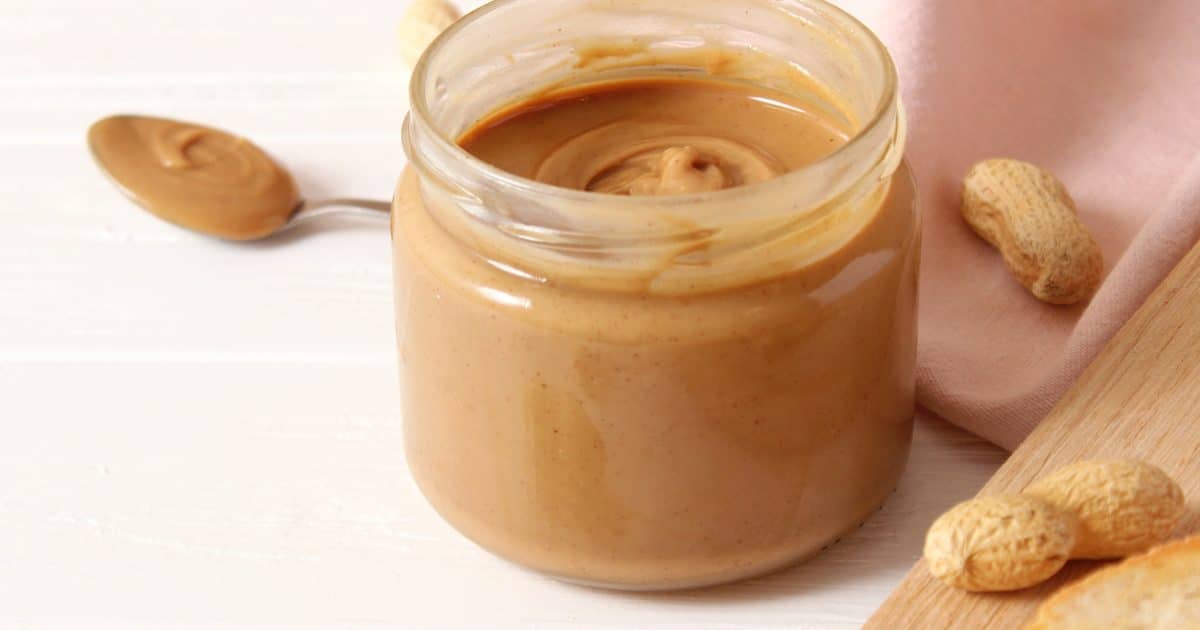
Transfer the finished peanut butter into a sterilized glass jar. Store it in a cool, dry place away from direct light. Unlike commercial versions, homemade peanut butter contains no stabilizers — so some natural oil separation may occur over time. That's normal. A quick stir before use brings it back together.
The absence of preservatives means the shelf life is shorter than what you'd find on a supermarket shelf, but the flavor more than compensates. And since a batch costs under 3 euros, making a fresh jar every couple of weeks is no hardship at all.
Variations that expand the recipe far beyond breakfast
The base recipe — peanuts, honey, fleur de sel — is deliberately neutral enough to take on other flavors without losing its character.
Sweet variations worth trying
Adding cocoa powder during blending creates a chocolate peanut butter that works beautifully on toast or as a dip. A small amount of vanilla deepens the sweetness without adding sugar. Cinnamon brings warmth and pairs particularly well with honey, making the spread feel almost autumnal.
These additions require no changes to the core process. Blend them in at the same stage as the honey and salt, and adjust quantities to taste.
The savory version
Skipping the honey entirely produces a clean, unsweetened peanut paste that works well in savory cooking — think noodle sauces, marinades, or dressings. This version pairs naturally with soy sauce, ginger, or lime juice. It's a different product entirely, but made with the same one-cup base and the same five-step process.
- No additives, stabilizers, or preservatives
- Full control over texture and sweetness
- Costs less than 3 euros per batch
- Easily adapted to sweet or savory uses
- Shorter shelf life than commercial versions
- Requires a food processor
- Natural oil separation may occur over time
The appeal of this recipe isn't just the cost or the clean ingredient list. It's the realization that something most people buy without thinking — a staple that sits in millions of kitchens — can be made better at home in under ten minutes. Just like cooking techniques that rely on simple processes to produce complex results, the best homemade peanut butter comes from understanding a few basic principles and applying them well.
And once you've made it once, the industrial version becomes genuinely hard to go back to.