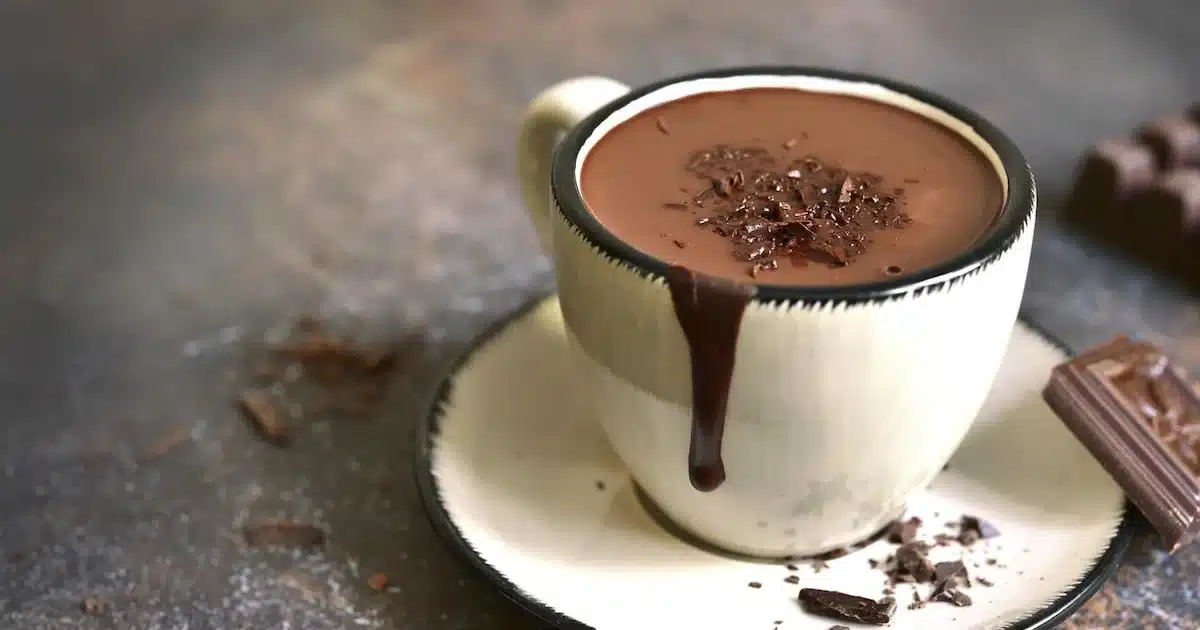
Homemade hot chocolate made with real dark chocolate is in a category of its own. With just 3 ingredients, 50 cl of milk, 100 g of chopped chocolate, and a teaspoon of starch, you get a thick, velvety drink that makes the powdered version feel like a distant memory.
There's a reason why old-fashioned hot chocolate has never really gone out of style. On a rainy afternoon, after a long winter walk, or simply as a cozy weekend brunch treat, nothing hits quite the same as a cup of something warm, rich, and genuinely chocolatey. And the difference between a proper homemade hot chocolate and a sachet of cocoa powder stirred into hot water? Enormous.
The secret isn't complicated. It's just real chocolate.
Real chocolate changes everything
Cocoa powder has its place. But when you swap it for 100 g of actual dark chocolate, finely chopped, something shifts. The fat content of the chocolate, combined with whole milk, produces a depth of flavor that no powder can replicate. The result is rounder, more intense, and unmistakably richer.
Why dark chocolate works best
Dark chocolate brings bitterness and complexity that balance naturally with the sweetness of the milk. That balance is what makes the drink feel indulgent without being cloying. For those who prefer a gentler flavor, milk chocolate is a perfectly valid alternative. The drink becomes softer, sweeter, more approachable for children or anyone who finds dark chocolate too assertive. The choice is yours, but the method stays the same.
The role of starch in texture
Here's the ingredient most people skip, and the one that makes all the difference: 1 teaspoon of cornstarch (or any neutral starch). Dissolved in a small amount of cold water before being added to the pan, it thickens the mixture just enough to give the hot chocolate that signature velvety, slightly dense texture. Without it, you get a pleasant chocolate milk. With it, you get something that coats the inside of the cup and clings to the back of a spoon. That's the texture worth chasing. It's also the same principle behind getting the right consistency in a sauce — the thickening agent transforms the whole experience.
Always dissolve the starch in a little cold water before adding it to the hot milk. Adding it dry directly to the pan causes lumps that are nearly impossible to whisk out.
The recipe: 3 ingredients, 2 steps, 2 cups
The simplicity here is the point. This is not a recipe that requires technique or equipment beyond a saucepan and a whisk.
Ingredients (for 2 cups):
- 50 cl of whole milk
- 100 g of dark chocolate, finely chopped
- 1 teaspoon of cornstarch, diluted in a little cold water
- 1 tablespoon of sugar (optional, adjust to taste)
Preparation:
- Pour the milk into a saucepan and heat over low heat. Wait until it just begins to simmer — small bubbles forming at the edges, not a full rolling boil. Add the chopped chocolate and stir gently until fully melted. Pour in the diluted starch and the sugar if using. Whisk continuously.
- Keep whisking over low heat for another minute or two until the mixture thickens slightly and becomes smooth and glossy. Pour immediately into two cups and serve.
That's it. Two steps. The entire process takes under ten minutes, making it just as quick as anything you'd find in a packet, but with results that aren't remotely comparable.
main ingredients are all you need for a genuinely thick, creamy homemade hot chocolate
Customizing your homemade hot chocolate
The base recipe is excellent on its own, but it also serves as a canvas. A few small additions can shift the character of the drink entirely depending on the occasion.
The Viennese version
To make a chocolat viennois, the Austrian-inspired version of the drink, simply top each cup with a generous dollop of freshly whipped cream. The contrast between the warm, dense chocolate underneath and the cold, airy cream on top is what makes this version feel like a genuine treat. Serve it for a weekend brunch or as a dessert alternative after dinner. It pairs beautifully alongside fluffy homemade crepes for an afternoon spread.
Spiced and marshmallow variations
A pinch of ground cinnamon stirred in at the end adds warmth and a subtle complexity that works especially well with dark chocolate. It's a small addition that makes the drink feel more considered. For a more playful, family-friendly version, a handful of mini marshmallows dropped into the cup just before serving is the obvious move. They melt slowly into the surface, adding sweetness and a soft, pillowy texture that children tend to love.
- Thick, velvety texture thanks to the starch
- Deep, genuine chocolate flavor
- Fully customizable sweetness level
- Works as a dessert drink or a comforting snack
- Thinner, less satisfying texture
- Artificial or flat chocolate taste
- Often contains added sugar and additives
- Hard to adjust intensity
When to make it and why it becomes a habit
Homemade hot chocolate made this way fits almost any moment of the day. It works as a breakfast drink on cold mornings, as an afternoon pick-me-up on a grey day, as a post-dinner dessert in a cup, or as the centerpiece of a family goûter. The occasions are practically endless during winter months.
But what makes people come back to this recipe isn't just the taste. It's the ritual. Heating the milk slowly, watching the chocolate melt into it, whisking until the mixture thickens — there's something grounding about making a drink properly rather than ripping open a sachet. And unlike coffee, which can have a complicated relationship with the body when consumed in excess (something worth keeping in mind if you're already drinking a lot of it under stress), a well-made hot chocolate is simply comforting.
The sugar in this recipe is deliberately optional. Depending on the percentage of cacao in your chocolate, the drink may already be sweet enough. A 70% dark chocolate bar will produce a noticeably bitter result that some people prefer as-is. A 55% or 60% bar tends to be more balanced without any added sugar. Tasting before you sweeten is always the right move. And if you're curious about how much sugar you can safely remove from any recipe without losing the result, a pastry chef's take on the subject is worth reading.
Once you've made hot chocolate this way, the powdered version stops making sense. The gap in quality is too wide, and the effort required is too small to justify going back.