
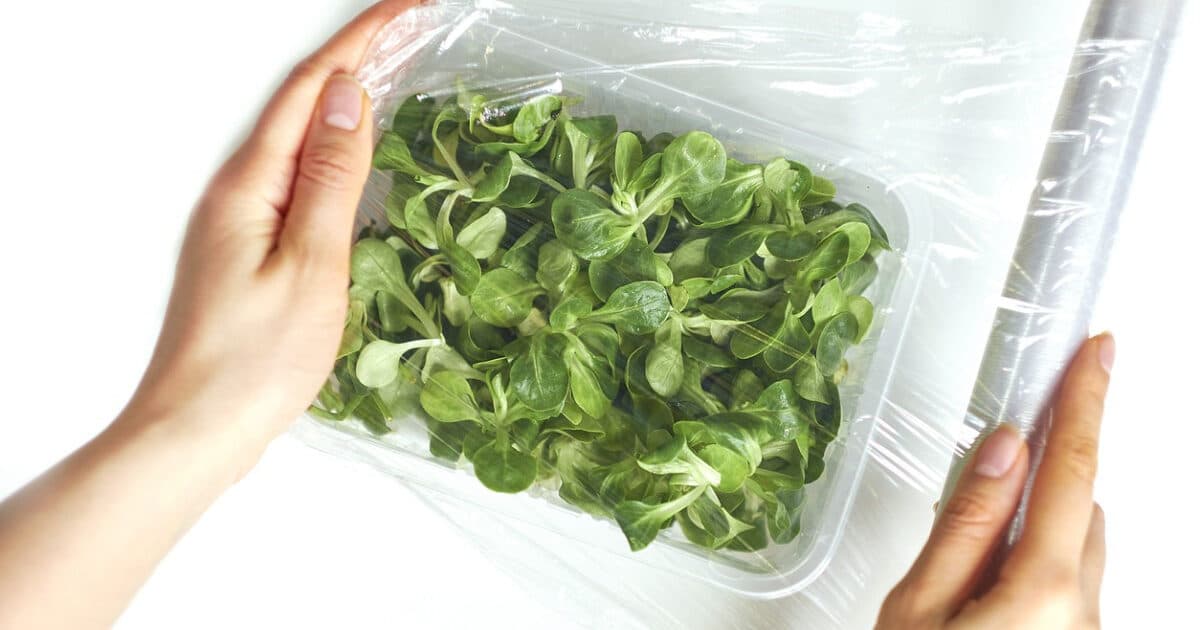
Plastic wrap is a kitchen staple found in virtually every household — but microbiologist and hygienist Christophe Mercier-Thellier describes it as genuinely dangerous for health. Made from PVC and loaded with phthalates, this everyday film can transfer harmful molecules directly into your food, particularly when fatty or hot ingredients are involved.
It's the kind of habit nobody questions. You cover a leftover bowl of béchamel, wrap a piece of cheese, stretch a sheet of cling film over last night's dinner before sliding it into the fridge. The gesture is automatic. But according to experts in microbiology and toxicology, plastic wrap may be quietly contaminating the very food it's supposed to protect.
The issue isn't hypothetical. It's chemical — and it starts with what the film is actually made of.
Plastic wrap is a source of chemical migration into food
PVC, or polyvinyl chloride, is the base material of most conventional food wrap. On its own, PVC is rigid and brittle. To make it flexible enough to cling to bowls and plates, manufacturers add plasticizers, primarily phthalates. These additives are what give the film its characteristic stretch and softness.
The problem, as toxicologist Stéphane Firmin explained to Notre Temps, is that these compounds don't stay put. When plastic wrap comes into contact with food, molecules can migrate out of the film and into whatever it's covering. This includes fragments of polymers, processing additives, and contaminants absorbed during manufacturing. The film doesn't need to melt or visibly degrade for this transfer to happen.
Chemical migration from plastic wrap to food can occur even at room temperature, with no visible sign of degradation. The transfer is invisible — which makes it easy to underestimate.
Phthalates: endocrine disruptors in your kitchen
Phthalates are classified as powerful endocrine disruptors. These substances interfere with the body's hormonal system by mimicking or blocking natural hormones, with potential consequences for fertility, development, and metabolic function. Their presence in food packaging has been a subject of concern in toxicology for years.
What accelerates the migration is fat. Fatty foods actively extract phthalates from the plastic film. A bowl of leftover creamy mushroom rice covered with cling film, a dish of vinaigrette-dressed salad, a plate of salmon — all of these represent high-risk contact scenarios. Mercier-Thellier was explicit on this point when speaking to Maison & Travaux: fatty foods and sauces such as béchamel or vinaigrette are precisely the foods that should never be in direct contact with plastic wrap.
Heat makes everything worse
Temperature dramatically increases the rate of chemical transfer. Using plastic wrap in the microwave or exposing it to boiling water without checking the manufacturer's specifications pushes migration rates significantly higher. Some films are specifically engineered for heat exposure and carry explicit labeling to that effect. But the majority of standard rolls found in kitchen drawers carry no such guarantee.
Reading the instructions printed on the box is not optional here. It's the only way to know whether a given film is rated for heat contact — and most are not.
Fatty foods and sauces carry the highest contamination risk
The chemistry is straightforward: fat is a solvent for phthalates. This is why the combination of plastic wrap and lipid-rich foods represents the most significant exposure vector. Oils, cream-based sauces, cheese, meat with visible fat, fish — all of these will draw plasticizers out of the film more aggressively than a bowl of plain vegetables would.
This matters for everyday storage habits. Wrapping a piece of butter directly in cling film, covering a dish of baked apples with cream before refrigerating, or sealing a fatty leftover with a tight layer of plastic — each of these creates direct, prolonged contact between a fat-soluble plasticizer and the food itself.
- Airtight glass jars (hermetic seal, no chemical migration)
- Aluminum foil (safe for cold storage, not for heating)
- Ceramic or glass containers with lids
- Direct contact with fatty foods (cheese, meat, sauces)
- Use in the microwave without heat-rated film
- Covering hot dishes or boiling liquids
- Long-term storage of oil-based preparations
The single-use nature of most plastic wrap compounds the problem from an exposure standpoint. Each use represents a fresh surface with maximum plasticizer availability, and when the habit is repeated daily across multiple meals, cumulative dietary exposure to phthalates builds up over time.
Practical alternatives to reduce plastic wrap exposure
The good news is that replacing plastic wrap doesn't require a major overhaul of kitchen habits. Hermetic glass jars are the most effective substitute: they create an airtight seal with zero risk of chemical migration, they're reusable indefinitely, and they work equally well in the fridge and the pantry. For anyone who regularly stores omega-3-rich fish or fatty leftovers, glass containers are the straightforward answer.
Aluminum foil is a valid alternative for cold storage, though it comes with its own caveat: it should never be heated. Placing aluminum foil in the oven or microwave is not recommended, and covering acidic or salty foods with foil for extended periods can also cause minor metal transfer. Used correctly — for wrapping cooled foods before refrigeration — it sidesteps the phthalate issue entirely.
What to do if you keep using plastic wrap
If eliminating plastic wrap entirely isn't realistic right now, a few targeted adjustments significantly reduce exposure. Avoid direct contact with any food that contains visible fat or oil. Never use standard cling film in the microwave unless the packaging explicitly states it is microwave-safe. Keep the film away from hot dishes and let food cool completely before covering it. And check the box: manufacturers are required to print usage specifications, including temperature limits and approved food types.
Black plastic utensils also warrant attention — experts flag them as a separate but related concern, as the colorants and additives used in black plastics carry their own migration risks.
The broader principle is simple: reducing both the frequency and duration of plastic contact with food is the most direct way to lower exposure to plasticizer compounds. Plastic wrap isn't going to disappear from kitchens overnight, but understanding exactly when and why it poses a risk makes it possible to use it far more selectively — or not at all.