Freezing mozzarella is technically safe and preserves its nutritional value, but it permanently alters the cheese's texture. The "white gold of Naples" becomes drier and more granular after thawing — which makes it far better suited for cooked dishes than for eating raw.
Mozzarella is one of those cheeses that feels almost too delicate to mess with. A fresh Italian pasta filata cheese with a high water content, it's prized precisely for that soft, milky, slightly elastic bite. So the question of whether you can freeze it without ruining it is a legitimate one, and the answer is more nuanced than a simple yes or no.
The short version: yes, you can freeze mozzarella. But knowing how to do it properly, and what to expect afterward, changes everything about how you use it.
Freezing mozzarella doesn't destroy its nutrients
The good news first. When mozzarella is frozen correctly, its core nutritional profile survives the process largely intact. Proteins, calcium, and lipids are all preserved at adequate levels, according to nutritionists. The freeze itself doesn't strip the cheese of what makes it valuable from a dietary standpoint.
What freezing does is halt bacterial proliferation. This is why it extends shelf life so dramatically — a fresh, unopened ball stored in the fridge lasts 1 to 2 weeks, and only 48 hours once the packaging has been opened. In the freezer, that same mozzarella can last up to 6 months.
maximum storage time for mozzarella in the freezer
One critical point: freezing slows bacterial activity, but it doesn't sterilize the cheese. If your mozzarella already looks or smells off before it goes in, the freezer won't fix that. The rule is simple — freeze it while it's still fresh, not as a last-ditch rescue attempt.
Texture is the real casualty of frozen mozzarella
This is where things get honest. The stretchy, pillowy texture that defines fresh mozzarella doesn't survive freezing well. When the cheese freezes, ice crystals form within its protein and fat network. Those crystals physically disrupt the structure of the cheese from the inside.
Why mozzarella becomes grainy after thawing
When you thaw frozen mozzarella, you'll notice it releases more water than usual, and the texture turns drier, sometimes spongy or slightly grainy. The characteristic "pull" — that satisfying stretch — is diminished or gone entirely. For a caprese salad or a charcuterie board, this is a dealbreaker. Thawed mozzarella simply doesn't hold up as a standalone ingredient eaten cold.
Shredded and block mozzarella freeze better
Not all mozzarella behaves the same way in the freezer. Shredded mozzarella and block mozzarella tolerate freezing significantly better than fresh balls stored in brine. Because they already have lower moisture content and are typically destined for cooked applications, the textural changes are far less noticeable. If you're stocking up for homemade pizzas or gratins, buying shredded mozzarella in bulk and freezing it is a genuinely practical strategy.
Fresh mozzarella balls in brine can still be frozen, but mentally earmark them for cooked dishes only.
How to freeze mozzarella the right way
The method matters. Three scenarios cover most situations:
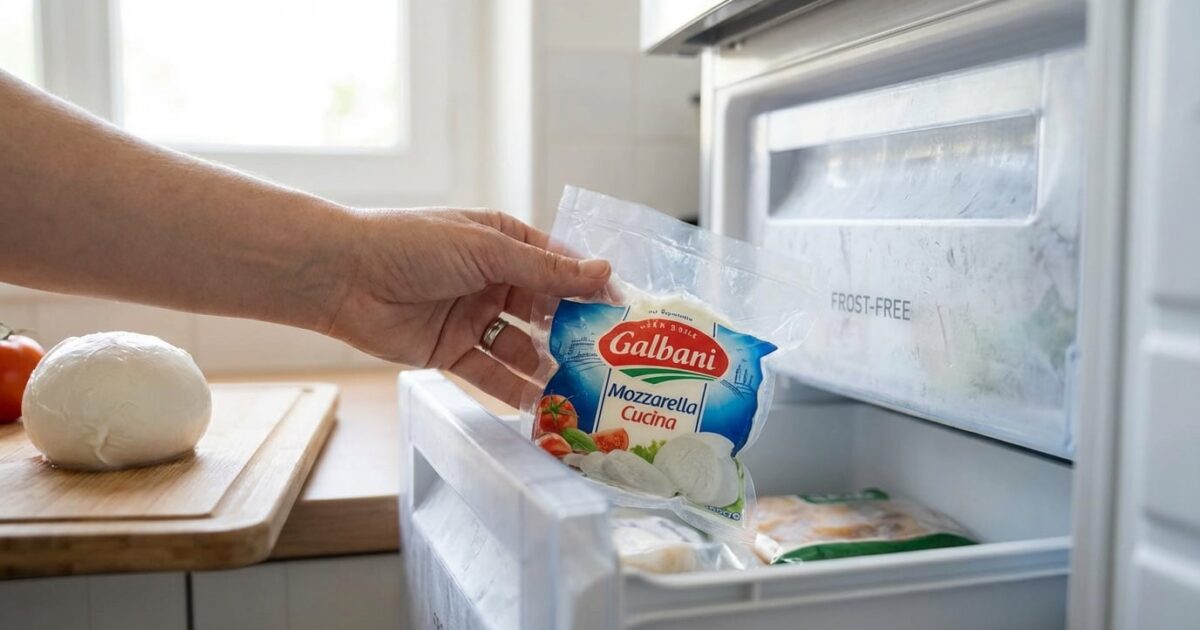
- Unopened ball in its original packaging: place it directly in the freezer as-is. The surrounding liquid acts as a buffer and helps protect the texture of the paste.
- Opened ball with remaining brine: transfer the cheese and its liquid together into a sealed freezer bag, pressing out as much air as possible before closing.
- Mozzarella without brine: slice the cheese first, let the slices firm up for a few minutes on parchment paper, then transfer them into an airtight freezer bag. Pre-slicing prevents the pieces from fusing into a single frozen block.
Never refreeze thawed mozzarella that has been eaten raw or left at room temperature. The only exception: mozzarella that has been fully cooked inside a dish (a lasagna, a gratin) can safely be refrozen as part of that dish.
Thawing frozen mozzarella correctly
The thawing process is just as important as the freezing itself. Always thaw mozzarella in the refrigerator, slowly, with several hours of lead time. Planning ahead is the only real constraint here — if you need it for dinner, move it from the freezer to the fridge in the morning.
Avoid the microwave. Using a microwave to defrost mozzarella causes the paste to harden, making the texture even worse than a natural thaw would. It's the one shortcut that actively makes things worse.
What to cook with frozen mozzarella
Once thawed, mozzarella works beautifully in any application where it melts. The textural changes that make it unsuitable for eating cold become irrelevant the moment heat is involved. Good uses include:
- Homemade pizza (the classic choice)
- Lasagna and gratins
- Quiche
- Croque-monsieur
- Oven-baked bruschettas
The cheese melts, bubbles, and browns just as it should. Nobody at the dinner table will know the difference. And if you enjoy experimenting with bold flavors in the kitchen — the kind of recipes where a good melting cheese makes all the difference — dishes like mloukhiya show just how much depth a single ingredient can add to a cooked preparation.
- Extends shelf life up to 6 months
- Preserves proteins, calcium, and lipids
- Works perfectly in cooked dishes
- Shredded and block mozzarella freeze especially well
- Texture becomes drier, grainy, or spongy after thawing
- Not suitable for raw consumption once frozen
- Cannot be refrozen after thawing (unless cooked into a dish)
- Microwave thawing hardens the paste
What this all adds up to is a clear and practical rule: freeze mozzarella when you have surplus, always freeze it fresh, and plan to use it in something hot. Treat it as a cooking ingredient from that point on, not a fresh cheese, and it will serve you well every time.